Look at your cluttered home and feel overwhelmed? Yeah, that was me too. The truth is, you do not need to overhaul your entire life in a weekend. You just need a plan that works with however much energy you have left after work and dealing with life.
This 7-day plan breaks minimalism into chunks you can actually handle. One small area per day. By Friday, you will see real change.
Day 1: Find Your Why
Before you touch a single item, figure out why you want minimalism in the first place. This matters more than you think.
Grab a notebook. Write down your real reasons. Are you tired of weekends lost to cleaning? Want to stop stressing about stuff? Trying to save money? Want your home to feel like somewhere you actually want to be?
Be honest. If your kitchen counters drive you crazy every morning, write that down. If you want to walk through your front door and actually exhale, put that down too.
Your why becomes your anchor. When you are standing in front of a box of old photographs, wondering why you kept that concert t-shirt from 2008, your why will help you make the call faster.
Day 2: The Clutter Audit
Today is about looking, not doing. Walk through your home and notice where the problems are.
Do not judge yourself. This is just information. Make a list: kitchen counters, that one closet, the junk drawer, basement boxes. You already know the trouble spots. This just reinforces what you already sense.
Notice patterns while you walk. Do you have four vegetable peelers? A drawer full of takeout menus from restaurants that closed years ago? Papers everywhere? Understanding your habits makes it easier to stop the bleeding.
Day 3: Start With One Drawer
Now we do something physical. Pick one drawer. Not a room. Not a closet. One drawer.
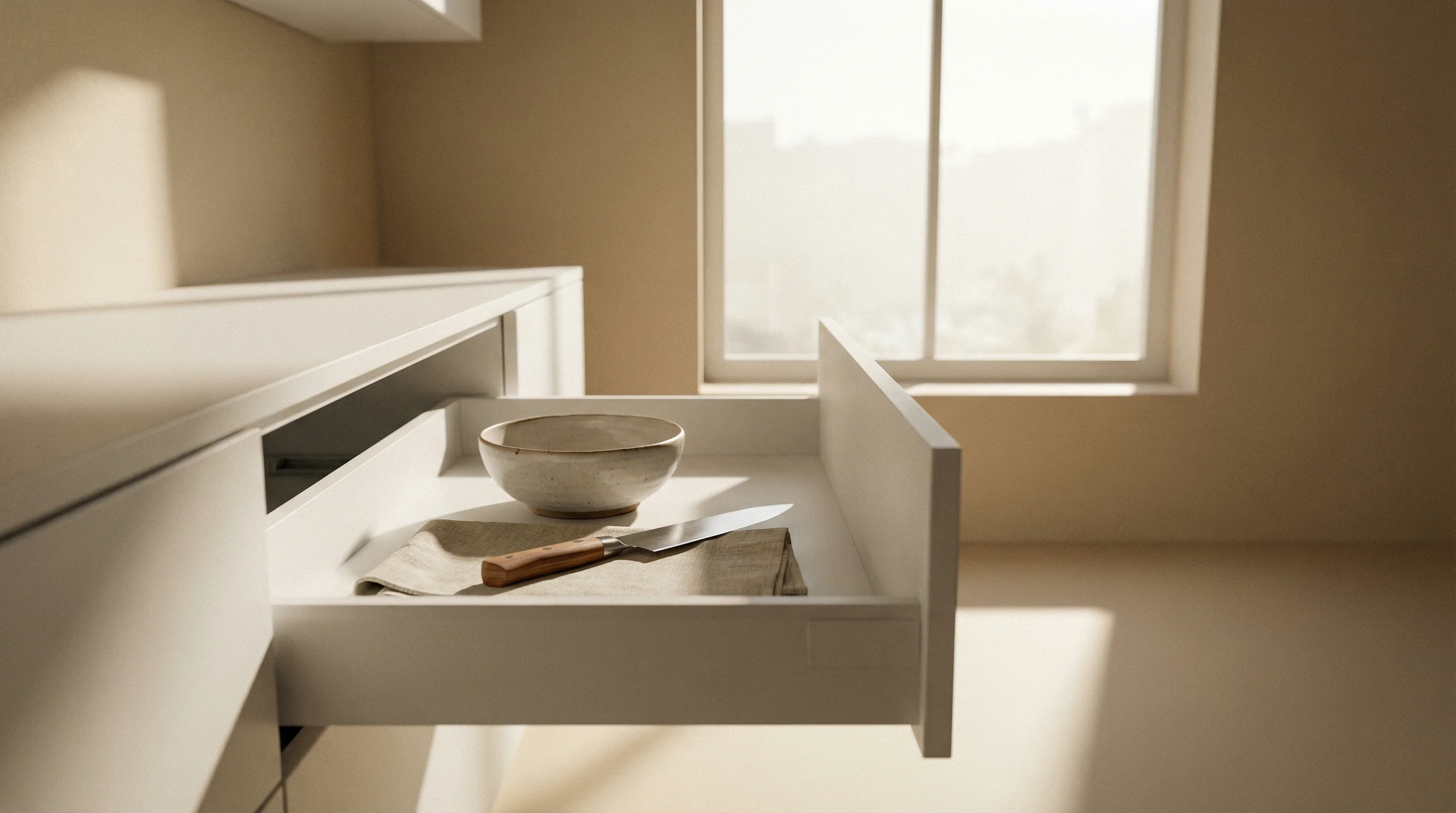
A kitchen drawer is a good starting point. Empty it completely. Wipe it clean. Then only put back items that meet all three: you use it regularly, it has a real purpose, and you have room for it.
The trick is making decisions while everything is out. When items are spread across the counter, you can actually see what you have. You see the duplicates. You see the stuff you forgot existed. This is the part most people skip—they just rearrange and call it organizing.
Set a timer for 15 minutes. You will be surprised what you can do in focused bursts.
Day 4: The One-In-One-Out Rule
Yesterday you made space. Today you protect it.
For everything new that comes into your home, something leaves. That new shirt? Donate an old one. That kitchen tool you just had to have? Let go of one you never use.
The math stays balanced. It sounds simple because it is. But this single rule catches clutter before it builds up again. You have to think about what you bring in, and that changes everything.
Day 5: Tackle Your Wardrobe
Clothing is where most people see the biggest change. It also feels surprisingly good.
Take everything out of one closet section. Yes, all of it. Spread it where you can see it all at once.
Ask three questions about each piece: Does this fit my body? Does it fit how I actually live? Does this feel like me?
If no to any of those, it goes to donate or sell. The 90/90 rule helps too—if you have not worn something in 90 days and will not wear it in the next 90, let it go.
Do not worry about what you might need someday. You can always buy it again if you actually miss it. But most people find they never do.
Day 6: Create Zones of Purpose
Every room needs a job. When spaces do not have a clear purpose, they become repositories for whatever does not have anywhere else to go.
Look at each room and ask what it is for. Living room = relaxing. Kitchen = cooking. Bedroom = sleeping. Then check whether the stuff in each room actually belongs there.
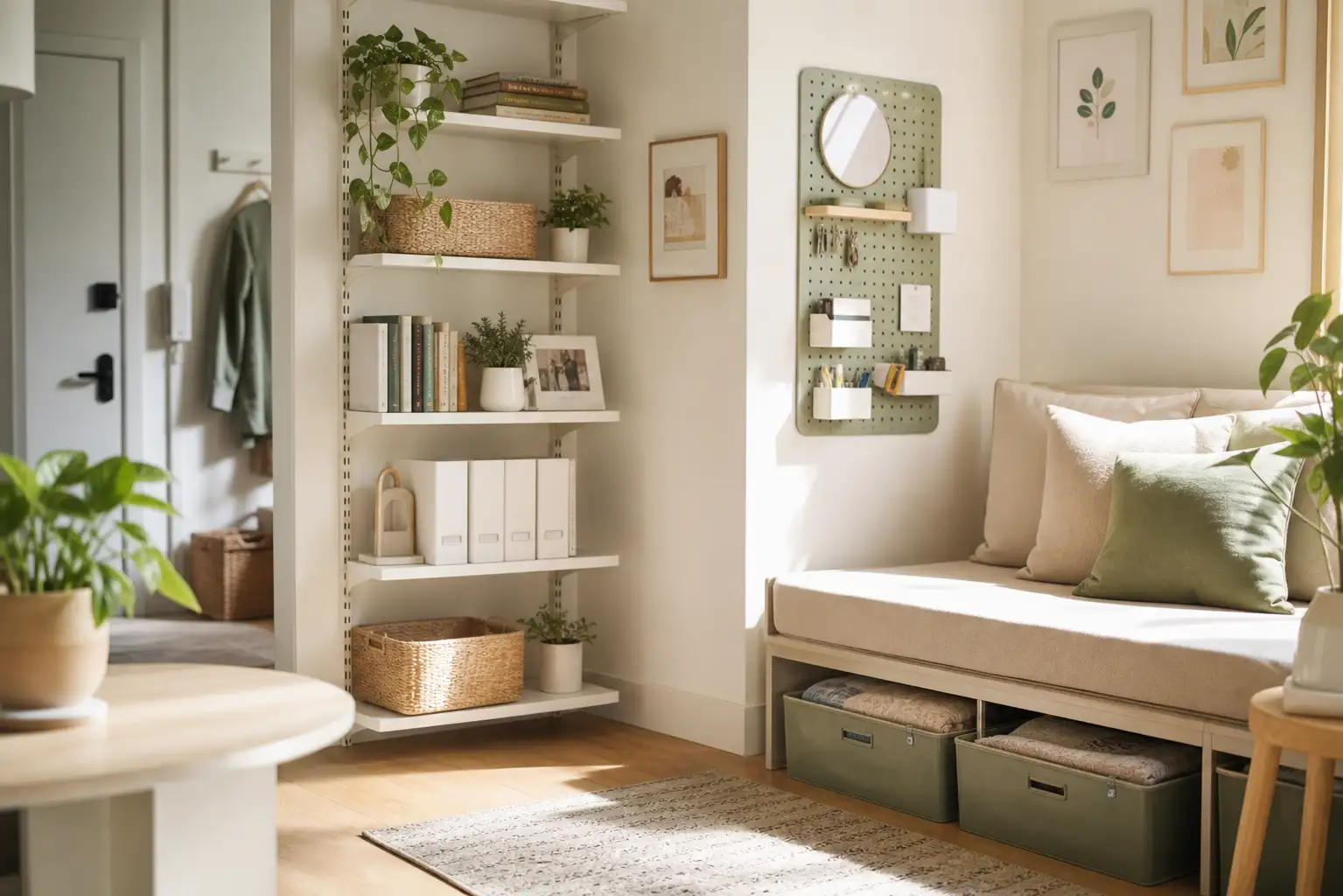
Give everything a specific home. Keys in one spot. Backpacks by the door. When everything has a place, putting things away becomes automatic instead of a decision every single time.
Day 7: Gratitude and Reflection
Look at what you did this week. One drawer cleared. One rule in place. One closet edited. Purposeful zones created.
Now write down three things you are grateful for today. Minimalism works better when you focus on what you have, not just what you are letting go of.
Notice how your space feels now. Different, right? That is the point.
Beyond Week One
You did the hard part—you started. Keep going by picking one new area each week. Move through your home slowly. In three months, you will have touched everything.
Minimalism is not a finish line. It is a practice. Some weeks you will make progress. Some weeks you will just hold steady. Both count.
Your home should serve your life. Every item you release makes room for something better.