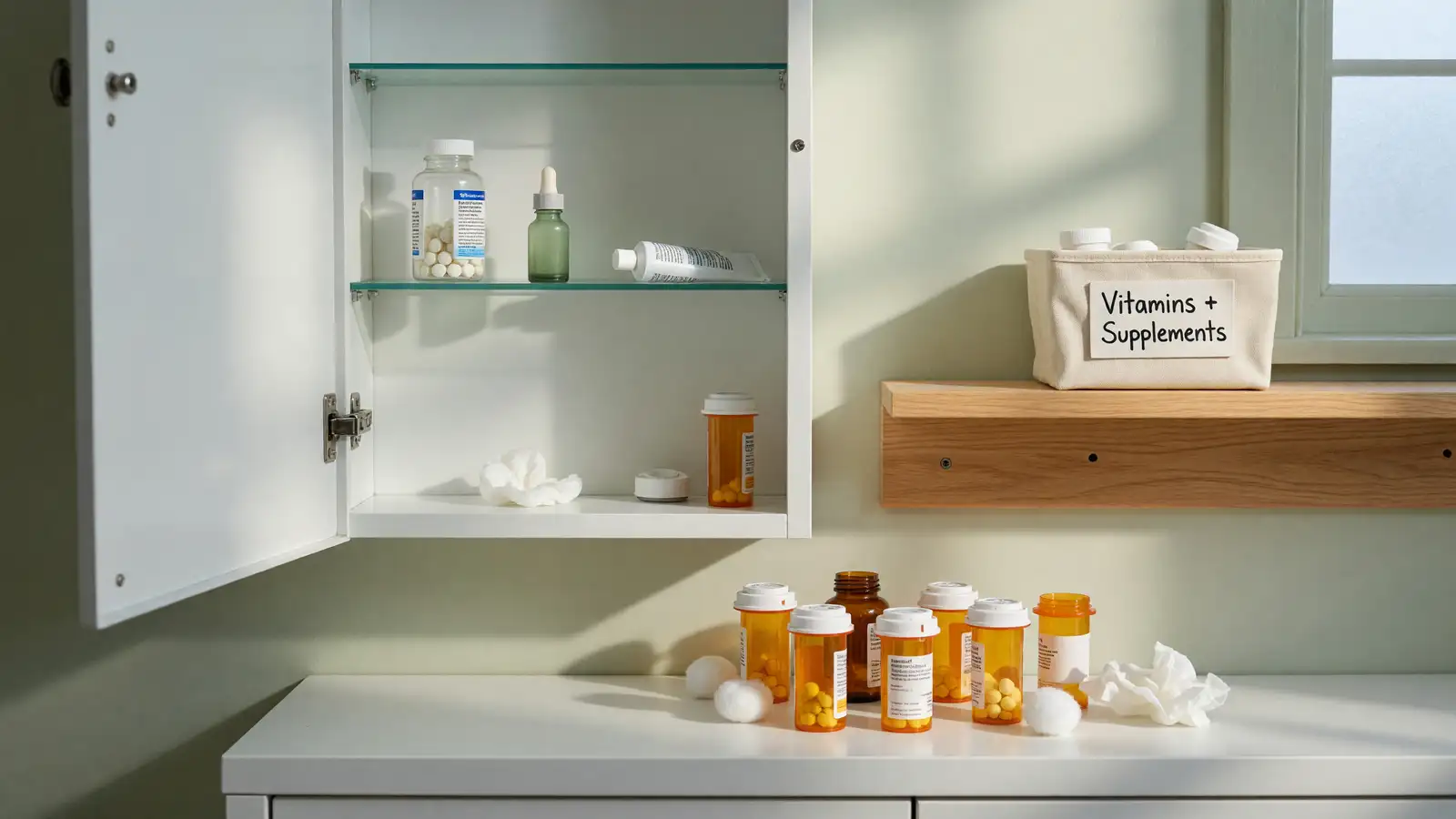
A medicine cabinet works best when you can find the right label quickly and keep everything out of children’s reach. Start with the storage directions on each package. A bathroom shelf can hold bandages and supplies even when the medicine itself needs a cooler, drier spot.
Start With an Expiration Date Audit
Check the expiration date on each package, including any earlier discard date on the pharmacy label. Set expired medicine aside in a secure place for disposal and arrange a replacement if you still need it. An unopened blister pack or a date that passed just yesterday does not extend the labeled shelf life. FDA guidance on expired medicines
Keep the original label legible. If the instructions give a shorter life after opening, write down the opening date. A calendar reminder to check the shelf every six months helps you spot supplies that will run out before your next check.
Daily Medications Versus Occasional Medications
Keep daily medicines together in their labeled containers, where the person taking them can reach them and children cannot. A divided bin inside a locked cabinet can separate daily prescriptions from occasional remedies without obscuring the names and strengths.
For occasional medicines, group the original packages by use. Check the label each time you take one. Similar-looking cold medicines can contain the same active ingredient.
First aid supplies such as bandages, gauze, antibiotic ointment, and medical tape belong in their own container. A small clear bin labeled “First Aid” eliminates the scramble of opening every cabinet in the bathroom when someone shows up with a bleeding knee. Keep this bin portable so you can carry it to wherever the injured person is rather than bringing the injured person to the bathroom.
The Humidity Problem
Most people do not realize that the bathroom is actually a terrible place to store many medications. The heat and moisture from showers degrade pills and capsules faster than dry environments. If your medicine cabinet is inside the bathroom, as most are, be selective about what lives in it.
Follow the temperature and storage instructions on each label. A dry, secure hallway cabinet may suit medicines intended for room temperature. Ask a pharmacist about anything that needs refrigeration or whose storage history is uncertain. Keep labels and child-resistant closures with the product.
Childproofing the Medicine Cabinet
If children live in or visit your home, every medication storage location needs childproofing. The bathroom medicine cabinet at adult height is not automatically safe. Curious children climb. A child standing on the toilet or on the edge of the bathtub can reach a surprising height.
Keep medicines out of sight and reach, use the child-resistant closure after each use and put the container back immediately. A locked cabinet or lockbox can add protection. Check that a visiting child’s bag, a guest’s prescription or a day’s pill organizer hasn’t become the easiest medicine to reach.
Safe Disposal of Expired and Unused Medications
For most medicines in the United States, start with an authorized take-back location or a prepaid mail-back envelope. Keep the medicine secure while arranging disposal. The FDA provides a decision guide with links to both options. FDA disposal guidance
If neither option is readily available, read the disposal instructions and look up the exact medicine on the FDA flush list. For a listed medicine, the FDA advises flushing it promptly in this situation because even one dose can pose a serious risk. Flush only medicines on that list. FDA flush list
For most other medicines that can go in household trash, leave pills intact, mix with something unappealing such as used coffee grounds, seal the mixture in a container and put it in the trash. Remove personal details from the empty packaging. Follow product-specific instructions for items such as inhalers and ask a pharmacist when the route is unclear.
Maintaining the System
Choose a regular inventory date to check expiration dates, refill needs and package condition. Check the label again at use, even if the next inventory is months away.
After an illness, return medicines to their labeled spot, restock used first-aid supplies and use the disposal guide above for anything expired.
A well-organized medicine cabinet is one of those invisible systems that nobody notices until it fails. The moment you need an antihistamine at two in the morning and find it immediately, in date, and properly stored, the effort of organizing it pays off completely.