Luggage and Travel Gear Storage: How to Organize Suitcases, Backpacks, and Travel Accessories Without Wasting Space
Most people only think about where to put their luggage when they are staring at an overflowing closet the night before a trip. Travel gear is bulky, irregularly shaped, and sits unused for months at a time, which makes it one of the most annoying categories of stuff to store. But the right system turns dead space into a functional travel station that keeps everything accessible and your home looking uncluttered.
Here is how to organize luggage and travel gear so it stops taking over your closets, garage, and guest room.
Why Travel Gear Clutter Gets Worse Over Time
The average American household owns between two and four pieces of checked luggage, plus at least one carry-on and a personal item like a backpack or tote, according to a 2024 survey by the Travel Goods Association. Add in packing cubes, toiletry bags, neck pillows, travel adapters, and document organizers, and you are looking at a small collection of items that collectively occupy more space than most people realize.
The problem compounds because travel gear tends to multiply. You buy a new suitcase for a specific trip, and the old one does not get donated because you might need a backup. A backpack from college stays in the closet because it still works. Shopping bags from airport purchases become improvised packing solutions. Before long, a single closet shelf has three suitcases, a duffel bag, and a pile of loose travel accessories with no clear home.
Margaret Peters, founder of Streamline Organizing in Portland, Oregon, says luggage clutter is one of the top five complaints she hears from new clients. “People do not realize how much volume travel gear takes up until they try to fit it alongside everything else in a standard closet,” she says. “A 28-inch checked suitcase takes up roughly the same shelf space as twelve sweaters.”
Assess What You Actually Use
Before buying storage bins or installing new shelving, take inventory. Pull every piece of travel gear out of closets, garages, attics, and under beds. Lay everything out and sort it into three groups.
The first group is gear you have used in the last two years and expect to use again. This is your active inventory. For most households, this includes one checked suitcase, one carry-on, a personal bag, and basic accessories like a toiletry kit and packing cubes.
The second group is gear that is damaged, outdated, or redundant. A suitcase with a broken wheel, a backpack with torn straps, or a second carry-on you never actually reach for should go. Donation centers, including Goodwill and Salvation Army, accept luggage in usable condition. Some shelters specifically request luggage donations because arriving guests need a way to carry their belongings.
The third group is gear you are unsure about. Put it in a labeled box with today’s date. If you have not opened that box in six months, donate or discard whatever is inside.
This sorting step matters because most people try to organize everything they own rather than just the items they actually need. Peters says cutting the inventory by even 30 percent makes the storage solution dramatically simpler.
The Nesting Strategy for Suitcases
The most space-efficient way to store suitcases is nesting them inside each other. A standard set of three hardshell suitcases (20-inch, 24-inch, and 28-inch) fits inside one another when you remove any dividers or packing cubes from the interior. This turns three separate items into the footprint of one.
Hardshell suitcases nest more easily than softside bags because the rigid walls maintain their shape. If you have a mix of both, put the hardshell cases inside each other and store softside bags separately.
For households with limited floor or closet space, the nested set can slide under a bed, fit on a high closet shelf, or tuck into the corner of a garage. The key is keeping the outermost suitcase accessible. If the largest case is buried at the bottom of a closet behind holiday decorations, you will avoid using it and buy another one instead.
Peters recommends keeping one small carry-on in an easily accessible spot, like the back of a coat closet or a mudroom bench, for spontaneous trips or emergencies. “You want at least one bag ready to grab without moving other things out of the way,” she says.
Vertical Storage for Garage and Basement
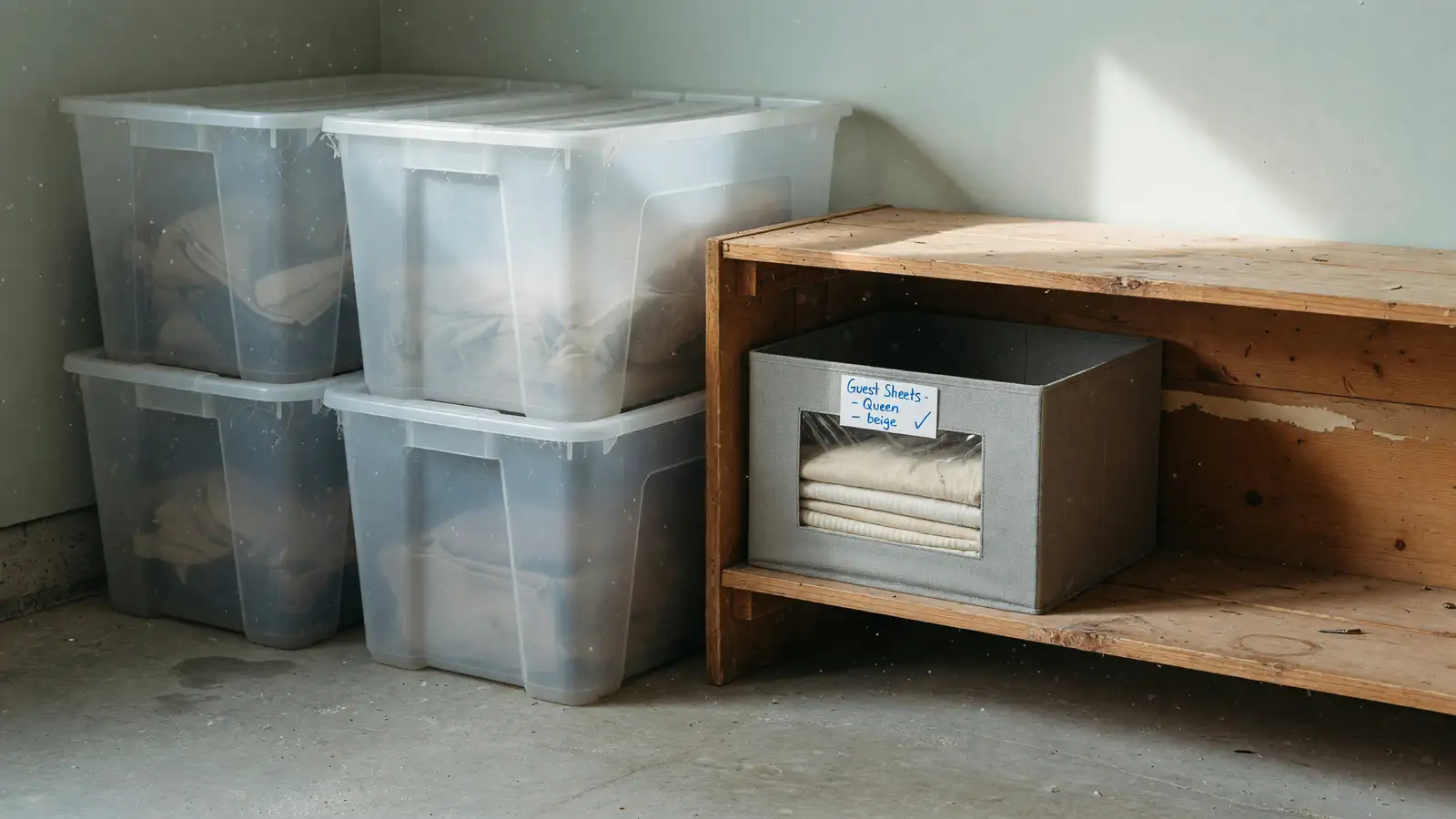
If your luggage lives in the garage or basement, vertical storage is almost always the answer. Floor space in these areas is precious, and suitcases sitting on the ground collect dust, moisture, and eventually mildew.
Wall-mounted shelving rated for 50 pounds per shelf handles most luggage. Position the heaviest suitcase on the lowest shelf and work upward. A simple two-shelf system can hold a full family’s travel gear without touching the floor.
For garages with exposed ceiling joists, overhead racks offer even more space. These attach to the joists and create a platform above your head where suitcases, sleeping bags, and camping gear can sit out of the way. The typical overhead rack holds up to 200 pounds, which is more than enough for a family’s entire travel collection.
One thing to watch: temperature and humidity. Basements that flood or garages that get extremely hot or cold can damage luggage over time, particularly fabric bags with zippers that can corrode. If your storage area has temperature extremes, consider putting luggage inside sealed plastic bins or at least wrapping zippers with a small piece of tape to slow corrosion.
Creating a Travel Accessory Station
Suitcases get most of the attention, but the smaller items cause the most daily frustration. Packing cubes, toiletry bags, travel-size containers, adapters, chargers, passport holders, and document folders all need a home that is separate from your regular household items.
The simplest solution is a dedicated bin or drawer. A medium plastic bin with a lid, labeled “Travel Accessories,” holds everything most families need. Inside the bin, use smaller zippered pouches or packing cubes to group items by type. One pouch for electronics (adapters, chargers, portable batteries), one for toiletries, one for documents and organization tools.
This approach works because it keeps the collection self-contained. When you pack for a trip, you pull out the bin, open it, and transfer what you need into your suitcase. When you return, the accessories go back into the same bin. No scattering items across multiple drawers or forgetting where the passport holder ended up.
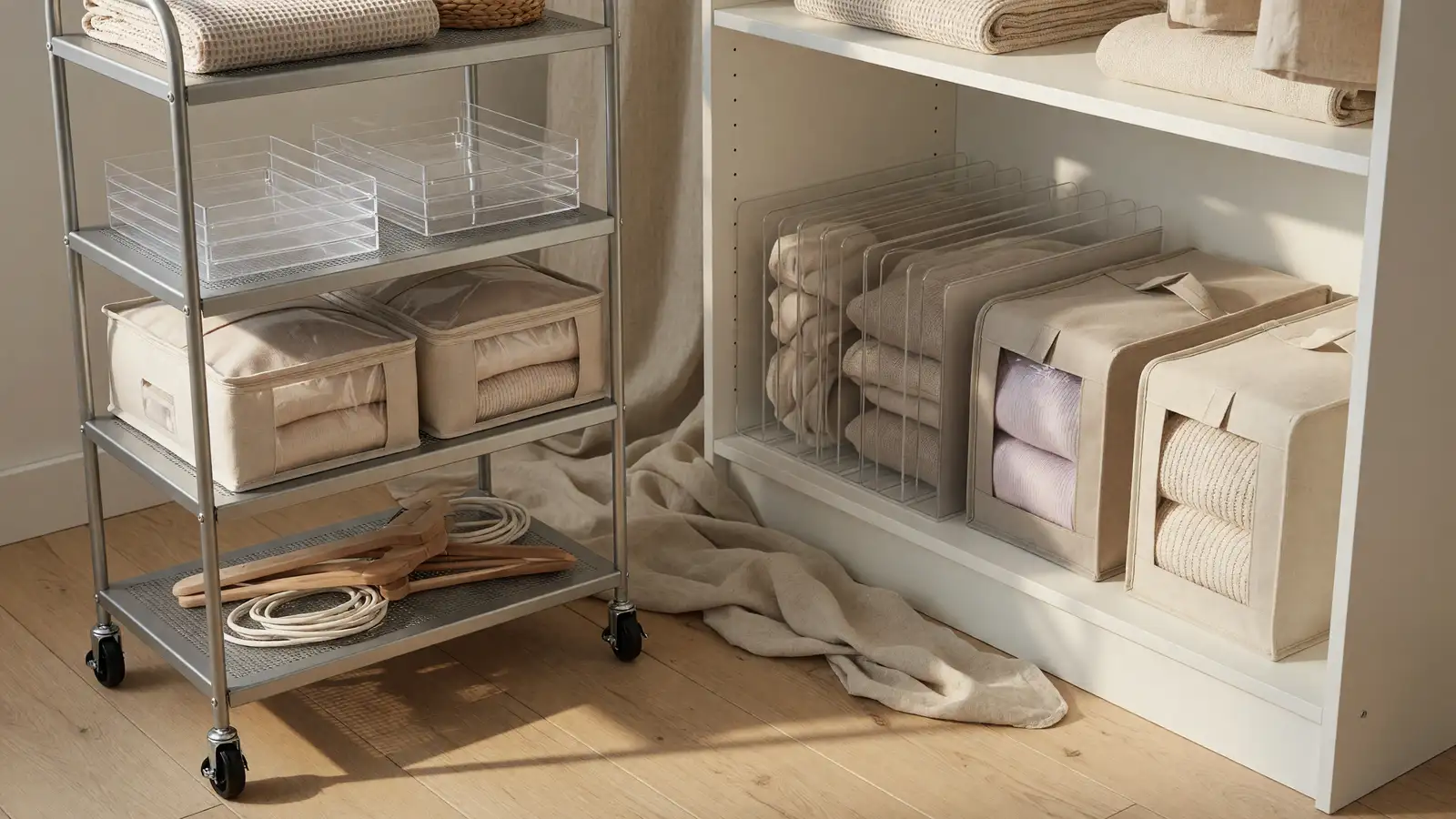
For families that travel frequently, a small rolling cart or a shelf in a coat closet works better than a bin because it stays open and accessible. Allison Dentry, owner of Neat Method in Austin, Texas, suggests assigning one shelf per family member for their personal travel items. “When each person knows exactly where their own travel gear lives, packing becomes a five-minute task instead of a thirty-minute hunt,” she says.
The Under-Bed Option for Small Apartments
In apartments where every square foot matters, under-bed storage is the most underused real estate for luggage. A standard bed frame with at least six inches of clearance accommodates a carry-on suitcase or a slim storage bin filled with travel accessories.
Rolling under-bed storage containers with wheels make access easy even in tight spaces. These typically measure about 30 by 20 inches, which fits most suitcases laid flat. The wheels mean you do not have to get on your hands and knees to reach your travel gear.
If your bed sits too low for containers, bed risers add two to four inches of height for under ten dollars. This is one of the cheapest and most effective storage upgrades for small spaces. The risers also create room for seasonal clothing storage alongside travel gear, maximizing the under-bed real estate.
One important note: under-bed areas tend to collect dust. Wrap suitcases in a pillowcase or a large garbage bag before sliding them under the bed. This keeps them clean and ready for your next trip without needing a wipe-down.
What to Do With Occasional Gear
Not all travel gear deserves prime storage space. Camping equipment, ski bags, surfboard travel cases, and large coolers that only come out once or twice a year should not compete with your everyday luggage for closet real estate.
For these items, designated garage or attic zones work best. Store them in clearly labeled bins or hang them from wall hooks. The goal is to keep them accessible enough that you will actually use them, but out of the way of gear you need regularly.
If you have truly occasional gear that you use less than once a year, be honest about whether you need to own it at all. Rental options exist for most outdoor equipment, and the cost of renting twice a year is usually less than the space and maintenance cost of storing it at home.
The Pre-Trip Check System
The final piece of an organized travel gear setup is a quick-check habit before every trip. Open your luggage, confirm it is clean and empty, and verify that your accessories bin has what you need. This two-minute check prevents the common scenario of arriving at your destination and discovering that the toiletry bag is still in the suitcase from your last trip, full of half-used shampoo bottles.
Many organized travelers keep a printed packing checklist taped inside their main suitcase. The checklist gets updated whenever you realize something was missing on a trip. Over time, it becomes a personalized system that eliminates guesswork and reduces the number of items you need to own.
Peters says the pre-trip check is the single habit that separates organized travelers from everyone else. “The people who seem to always have everything they need are not smarter or more organized by nature,” she says. “They just built a system once and stuck with it.”
Making It All Work Together
The best luggage storage system is the one you will actually maintain. Start by decluttering, then choose a storage method that fits your space: nesting for closets, vertical shelving for garages, under-bed containers for apartments, and dedicated accessory bins for everything else.
When your travel gear has a designated home, packing gets faster, closets stop overflowing, and you stop buying duplicates of things you already own but cannot find. That makes the effort worth it on its own.