I found an entire drawer’s worth of storage under my kitchen cabinets last month. I’d been living in this apartment for two years and had no idea it was there.
The previous owner installed a toe-kick drawer — one of those pull-out compartments tucked into the dead space beneath the lower cabinets — and I only discovered it because I dropped a measuring spoon and it skittered underneath. When I bent down to retrieve it, my hand hit a recessed handle I’d never noticed.
That drawer now holds my baking sheets and cooling racks, freeing up an entire lower cabinet for pots and pans. It got me thinking: how many other storage spots am I walking past every single day?
It turns out, quite a few. Here are eight hidden storage opportunities that most homes have — you just need to know where to look.
1. The Toe-Kick Drawer (Kitchen and Bathroom)
That four-inch-tall recessed space below your lower cabinets? It’s not just for your toes. Toe-kick drawers are shallow pull-out compartments that slide into that cavity, and they’re perfect for flat items: sheet pans, muffin tins, placemats, even shallow cleaning supply bottles.
If you’re handy, Rev-A-Shelf sells retrofit kits starting around $60 that install in an afternoon. You’ll need a jigsaw to cut the toe-kick panel, but the drawer unit comes pre-assembled with rails. For bathrooms, these are gold for storing extra toilet paper, cleaning sprays, or a flat hair dryer.
One caveat: measure twice. Some cabinet toe kicks sit higher than others, and you want at least 3.5 inches of clearance for anything useful to fit.
2. The Space Above Your Kitchen Cabinets
If your cabinets don’t go all the way to the ceiling, you’ve got a dust-collecting dead zone up there. But with the right approach, it becomes functional storage without looking cluttered.
The trick is using matching baskets or bins — I use a set of woven seagrass baskets from IKEA’s KNAGGLIG line ($15 each) — to store items you rarely need: holiday serving platters, extra vases, backup paper towel rolls. Line them up evenly and they look intentional rather than chaotic.
One thing I learned the hard way: put a sheet of wax paper or a plastic liner down first. The grease and dust that accumulate above a stove will ruin anything porous you store up there.
3. Inside Cabinet Doors
Every cabinet door in your kitchen and bathroom is unused vertical real estate. Adhesive-mounted organizers — Command makes good ones that hold up in humidity — can hold measuring spoons, pot lids, cutting boards, or cleaning sprays on the inside of sink-cabinet doors.
For spices, a slim wire rack mounted inside a pantry door keeps jars visible and reachable while freeing up shelf space. The Container Store sells an expandable door-mounted spice rack for about $25 that fits most standard cabinet doors.
4. Under the Bathroom Sink (Done Right)
Everyone uses this space, but almost nobody uses it well. The standard approach is to shove bottles in and shut the door fast. Instead, install a two-tier pull-out organizer. Simplehuman makes a compact under-sink caddy with sliding drawers ($45) that navigates around plumbing pipes.
Group items by category — hair products on one tier, skincare on the other, cleaning supplies in a separate slim bin — and suddenly you can find your dry shampoo without knocking over three bottles of leave-in conditioner.
5. The Cavity Between Wall Studs
Interior walls are typically 3.5 inches deep between studs, and that’s usable space. Recessed shelving between studs works anywhere: a shallow built-in shelf in a hallway for keys and mail, a niche in the bathroom for toiletries, or recessed cubbies in a kids’ room for books.
This one requires drywall work, so it’s not a quick Saturday project. But if you’re doing any renovation or patching work anyway, ask your contractor to frame out a few recessed niches. The cost is marginal when walls are already open, and the result looks custom-built.
6. Under the Stairs
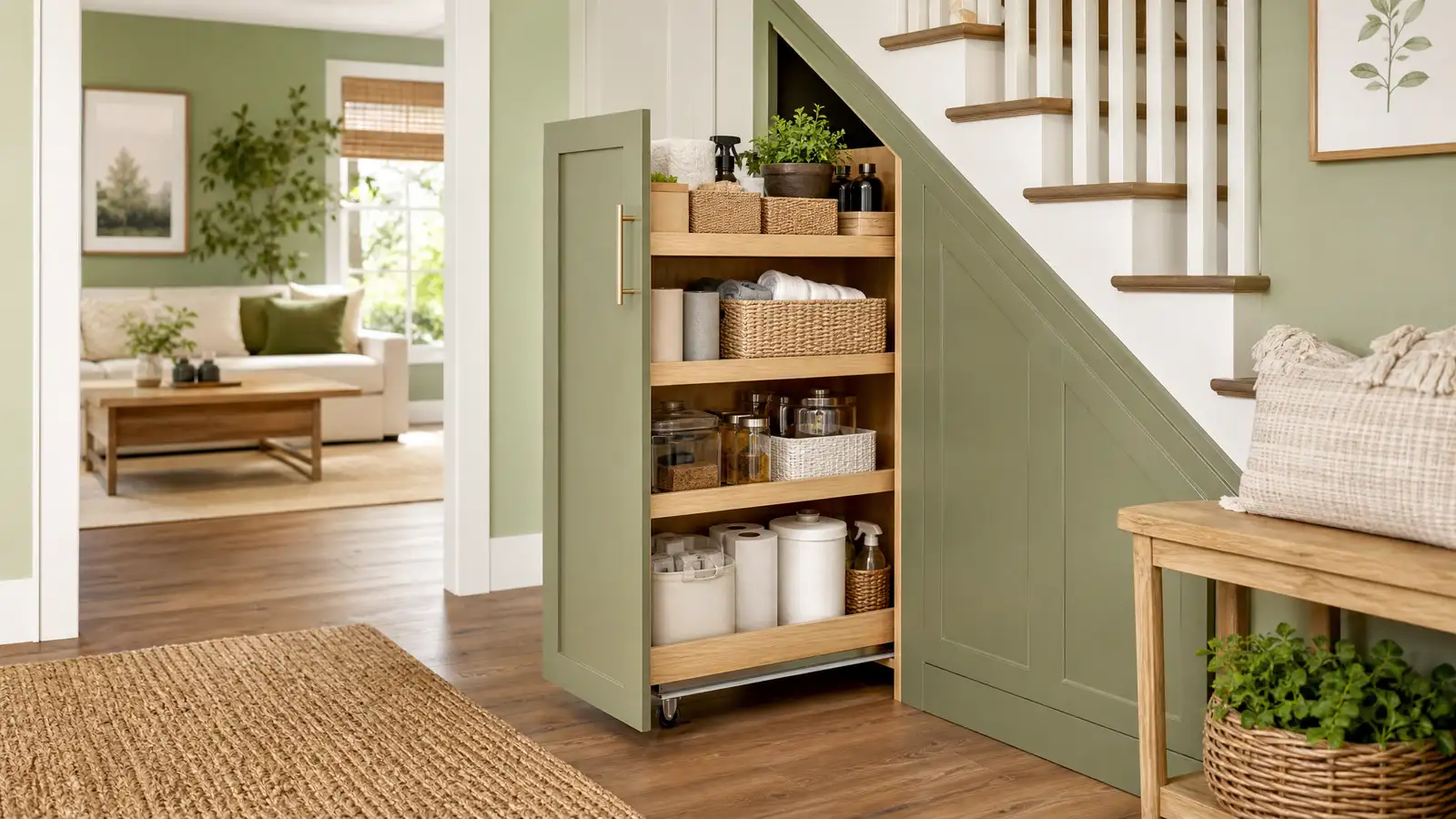
The triangular void beneath a staircase is the most wasted square footage in multi-level homes. Even a narrow space can fit pull-out shoe drawers, a small coat closet rod, or open cubbies for bags and backpacks.
If you’re renting or not up for construction, a rolling cart that fits the angle — measure the slope and look for tiered utility carts that follow it — slides right in and gives you accessible shelving without any permanent changes.
7. Above the Refrigerator
The gap between your fridge and the ceiling is usually a graveyard for old cereal boxes and takeout menus. But with a simple cabinet or a sturdy shelf mounted at the right height, it holds less-used kitchen gear: an ice cream maker, a pressure canner, large roasting pans, or bulk paper goods.
Just keep the weight reasonable. A shelf rated for 50 pounds is plenty for light kitchen overflow, and brackets screwed into studs will hold more than drywall anchors ever will.
8. Furniture That Pulls Double Duty
Your furniture choices are storage decisions whether you think about them that way or not. An ottoman with a lift-top lid holds blankets and board games. A bed frame with drawers underneath eliminates the need for under-bed plastic bins. Bench seating in a dining nook can have hinged lids for table linens and seasonal decorations.
The difference between a piece of furniture and a storage solution is just whether you use the space inside. Before buying anything new, ask yourself: does the version with hidden storage cost much more? Usually, it’s a $30–50 upgrade. Worth it every time.
You don’t need a bigger house. You probably don’t even need more shelving. Most homes have 10–15% more storage capacity than anyone realizes — it’s just hidden in the architecture. The next time you feel like your space is bursting at the seams, take a walk around with fresh eyes and look for the gaps, cavities, and dead zones you’ve been ignoring. There’s a good chance one of them is holding an entire drawer’s worth of storage you’ve been walking past for years.