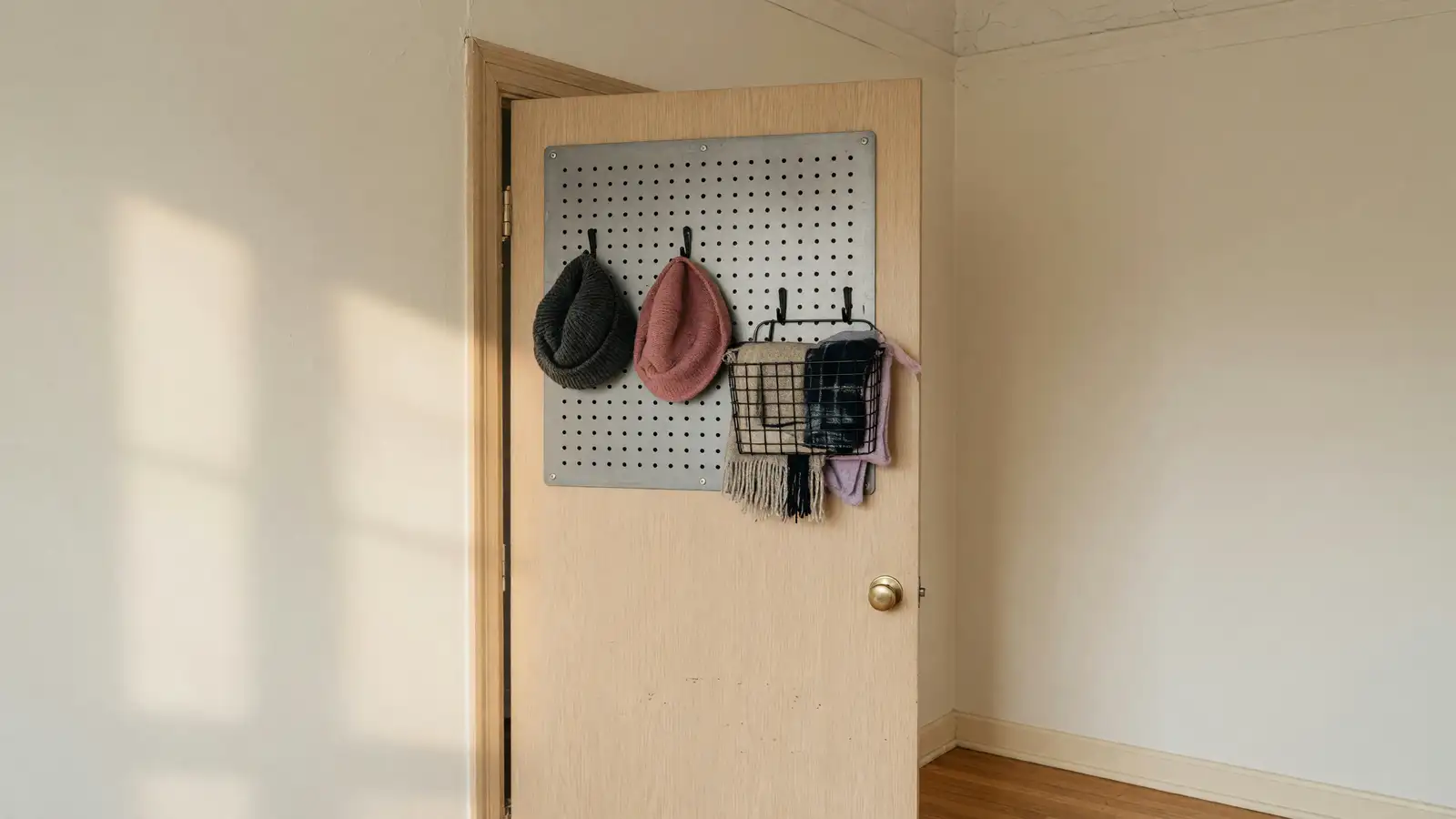
Walk into most garages and the tool situation is the same: a toolbox with drawers so jumbled you cannot find the right screwdriver, a shelf where power tools are stacked precariously, and a corner where long-handled tools lean against each other like exhausted dancers. Every project starts with a ten-minute tool hunt before a single minute of actual work begins.
A pegboard tool wall solves this problem permanently. When every tool has a visible, designated spot, finding the right one takes seconds. Putting it back takes seconds. The system maintains itself because the alternative — a blank spot on the wall screaming that something is missing — is impossible to ignore.
Planning Before Drilling
The most common pegboard mistake is mounting the board and then figuring out tool placement by trial and error. This approach produces a cluttered arrangement that wastes the board’s potential. Instead, lay all your tools on a large piece of kraft paper cut to the pegboard’s dimensions. Arrange them on the paper, trace each tool’s outline, and mark where hooks should go. Move things around until the layout feels logical.
Group tools by task rather than by type. All electrical tools together: voltage tester, wire strippers, electrical tape. All painting tools together: brushes, rollers, painter’s tape, putty knife. When you start a project, you grab everything from one zone rather than crisscrossing the wall collecting individual items.
Place the most frequently used tools in the prime zone between chest and eye level. Less-used tools go higher or lower. The hammer you reach for weekly belongs at arm height. The pipe wrench you use annually can live near the top or bottom.
Hook Selection Matters
Pegboard hooks are not all created equal. The cheap wire hooks that come in variety packs bend under weight and pop out of the board when you grab a tool. Invest in heavy-duty hooks with retaining clips or locking mechanisms that secure the hook to the board. They cost marginally more and eliminate the frustration of hooks that detach with every use.
Specialty hooks solve specific storage challenges. Double-prong hooks hold levels and long straight edges securely. Curved hooks cradle power drills by the handle. Loop hooks hold hammers by the head with the handle facing outward for easy grabbing. The right hook for each tool type makes the difference between a system that works and one that slowly degrades into chaos.
Beyond the Board
A pegboard wall works best as part of a larger tool storage system. A magnetic strip mounted below the pegboard holds metal items that do not hang well: drill bits, screwdriver bits, small wrenches, hex keys. The magnetic strip keeps these small, easily lost items visible and accessible without consuming pegboard real estate.
A small shelf mounted to the bottom of the pegboard creates a landing zone for items used during the current project. The shelf is temporary storage, not permanent. At the end of each project, every item returns to its pegboard home. This discipline is what keeps the system functioning month after month.
For power tools too heavy for pegboard, a French cleat shelf system on the adjacent wall provides sturdy support. The cleat design means shelves can be rearranged as your tool collection changes without drilling new holes.
The Shadow Board Technique
The ultimate pegboard upgrade is the shadow board: painting each tool’s outline on the board behind its hook. The outline serves as both a placement guide and a visual check. An empty outline screams louder than an empty hook. Anyone who borrows a tool knows exactly where it returns, even if they were not the one who organized the wall.
Shadow boards take an afternoon to create but pay dividends for years. Use a paint pen in a contrasting color and trace carefully around each tool while it hangs in position. The result looks professional and functions flawlessly.
A well-organized tool wall is one of the most satisfying projects a homeowner can tackle. It transforms the garage from a storage problem into a workspace solution. The next time a project calls for a specific screwdriver, you will reach for it without thinking and find it exactly where it belongs.