A well-organized freezer is the closest thing to a time machine in your kitchen. You pull out a homemade lasagna on a Tuesday when cooking feels impossible, and suddenly dinner is handled. But a freezer that looks like an archaeological dig site, with unlabeled mystery packages entombed in ice, delivers the opposite feeling: stress, waste, and the quiet guilt of good intentions buried under frost.
The fix is a zone system.
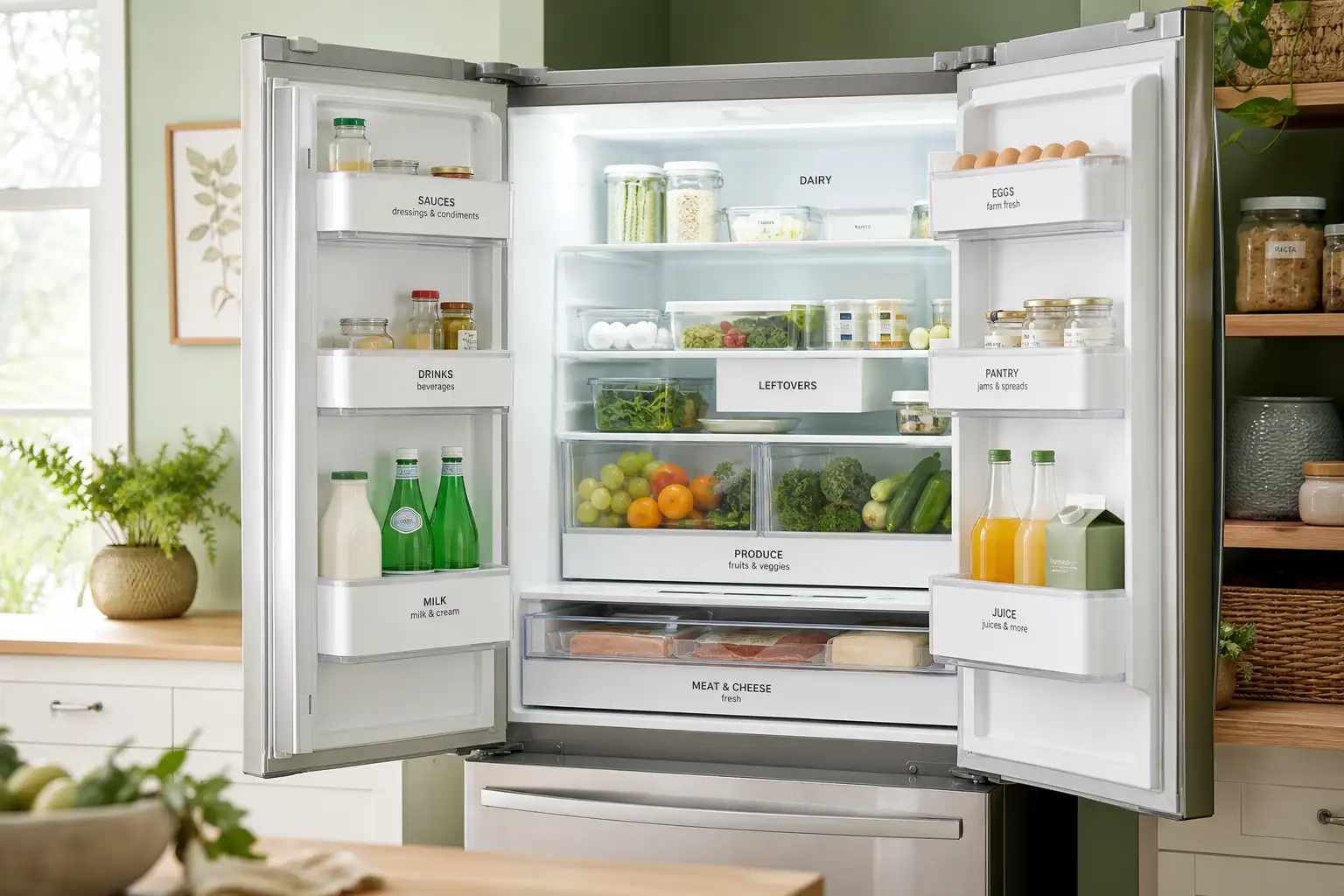
Zone-based organization means dividing your freezer into distinct areas based on food type and usage. Every item has a designated home, and every home is obvious at a glance. No more excavating through bags of frozen peas to find the chicken breasts you swear you bought last week.
The Core Freezer Zones
Most meal-prep freezers need four zones. The meat zone holds raw proteins: chicken breasts, ground beef, pork chops, fish fillets. Keep this zone at the bottom of the freezer if possible, since raw meat leaking onto vegetables is a food safety disaster waiting to happen. A dedicated bin or shelf divider physically contains the meat zone and makes the boundary visible to everyone in the household.
The veggie zone stores frozen vegetables, fruit for smoothies, and herbs. This zone often becomes a dumping ground because bags of peas and broccoli all look identical when frosty. Clear plastic bins solve this. A bin labeled “smoothie packs” holds pre-portioned spinach and berry bags. Another labeled “dinner veggies” holds the green beans, corn, and mixed vegetables.
The meal portions zone is the hero of meal prep. This is where you store individual portions of fully prepared food: frozen soups, casseroles, burritos, pre-marinated proteins, and batch-cooked grains. Each portion is labeled with the meal name and date. When you open the freezer on a busy Wednesday, this zone is the first place you look.
The grab-and-go zone holds convenience items like frozen pizzas, breakfast sandwiches, and treats. This zone is intentionally separate from the meal portions zone so nobody accidentally thaws your carefully prepped chili when they were looking for a frozen waffle.
Containers Worth Investing In
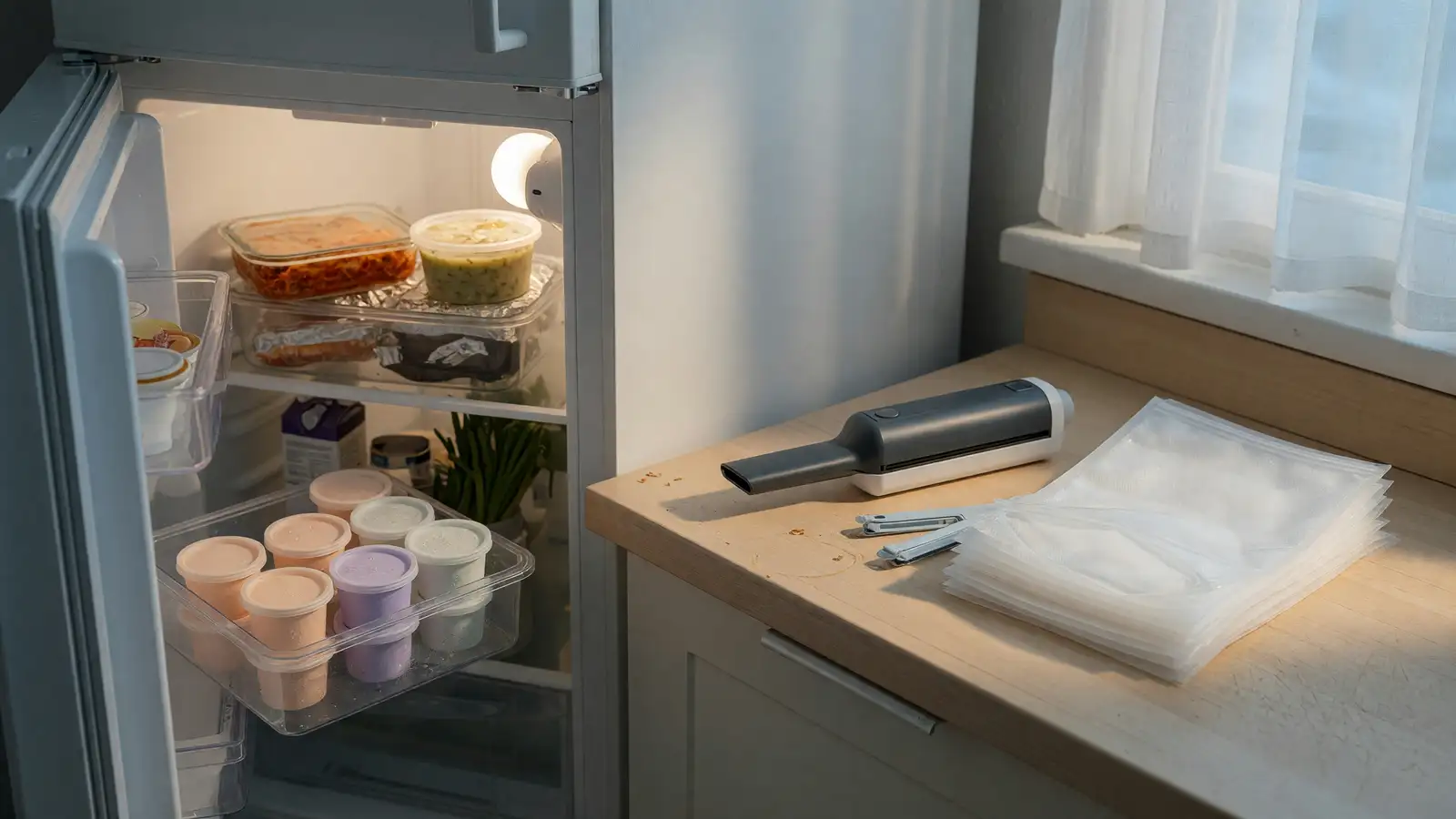
The right containers make every freezer zone functional. Souper Cubes are silicone freezing trays that portion liquids into one-cup blocks. You freeze soup, broth, or sauce in them, pop out the frozen cubes, and transfer them to a bag. Each cube is a single serving. The trays come with lids and stack neatly when full.
Stasher bags are reusable silicone bags that replace disposable freezer bags. They seal airtight, stand up on their own, and go directly from freezer to microwave or boiling water for reheating. They cost more upfront than plastic bags but last for years and eliminate a consistent source of kitchen waste.
For solid items, stackable rectangular containers maximize vertical space. Square shapes use shelf space more efficiently than round containers. Choose containers with flat lids so you can stack them without wobbling. Glass containers work in freezers but need headspace because glass becomes brittle when cold and food expands as it freezes.
The Labeling System That Actually Works
Freezer tape is a specific type of adhesive tape that sticks at low temperatures where regular masking tape peels off. It is cheap and indispensable. Every item that goes into the freezer gets a piece of freezer tape with two pieces of information: what it is and the date it went in.
This sounds obsessive until you have confidently identified a frozen block of chili versus a frozen block of bolognese at seven in the morning before coffee. Write the date in month-day format and include the year for anything you might keep longer than a month. Use a permanent marker. Pencil fades. Ballpoint pen smudges on cold surfaces.
Freezing Liquids Flat
One of the simplest freezer hacks changes everything about how much you can store. Freeze soups, sauces, and broths flat in bags rather than standing them upright as blocks. Lay the filled and sealed bag on a baking sheet and freeze it horizontal. Once solid, the flat bag can be filed vertically like a book on a shelf. You can fit three times as many portions in the same space, and thin frozen slabs thaw in a fraction of the time a solid block requires.
This technique also works for ground meat. Instead of freezing a one-pound package as a brick, flatten it into a half-inch sheet inside the bag. It defrosts in fifteen minutes under cold running water instead of taking hours.
FIFO: First In, First Out
FIFO is the restaurant-kitchen principle that prevents food from expiring at the back of the shelf. When you add new items to a freezer zone, place them behind the older items. The oldest food is always the easiest to grab. This rotation habit eliminates the freezer-burned chicken thighs discovered six months after purchase.
If your shelves are deep, use rectangular bins as drawers. Pull the bin out to access items in the back without unstacking everything. The bin itself becomes a mini-FIFO system: new items go in the back of the bin, old items get pulled from the front.
The Monthly Inventory Habit
Set a recurring calendar reminder for the first Saturday of every month: freezer inventory. This takes ten minutes. Pull everything out, wipe down the shelves, and take stock. Identify items approaching freezer burn, meals you forgot existed, and gaps in your prep stash.
This is also when you declutter. Freezer-burned food is safe to eat but tastes terrible. Be honest about what you will actually use. The broccoli from 2024 has lost its structural integrity and its will to live. Compost it and move on. A freezer inventory is also the moment to update your meal plan for the upcoming month based on what you already have.
Preventing Freezer Burn
Freezer burn happens when air reaches frozen food and dehydrates it. Minimize air contact by double-wrapping items and pressing air out of bags before sealing. Use containers appropriately sized for the contents, since empty space is just air waiting to cause damage.
A chest freezer maintains a more consistent temperature than a refrigerator freezer compartment. If you do serious meal prep, a small chest freezer pays for itself in reduced food waste within a year.
A zoned freezer is not a luxury for organized people. It is a practical tool that makes cooking cheaper, faster, and less wasteful. Set up the zones once, commit to the labeling habit, and your freezer becomes a genuine asset instead of a cold abyss.