Look for the maker and model before selecting an anchor. An eight-drawer dresser may be covered by a recall, even if a similar-looking dresser in another room uses an ordinary anti-tip kit.
Check the HAUOMS eight-drawer recall first
On November 5, 2026 the U.S. Consumer Product Safety Commission announced a recall of a black HAUOMS eight-drawer dresser sold by Jiastfeng. The product packaging carries SKU AJ_DJ504298_1. Compare the label and photographs in the notice. If the box is gone, use your order confirmation to identify the seller and ask Jiastfeng to confirm whether the dresser is affected. CPSC recall 27-068 and product photos
If the recalled dresser is unanchored, stop using it immediately and keep it where children cannot reach it. Contact Jiastfeng for the full refund. The notice explains how to mark the unit, remove the drawers and document it before disposal. Use the order given in the notice so you retain the evidence the seller requests. The recall remedy is a refund. Having a strap on a recalled unit does not replace that remedy.
For a different dresser
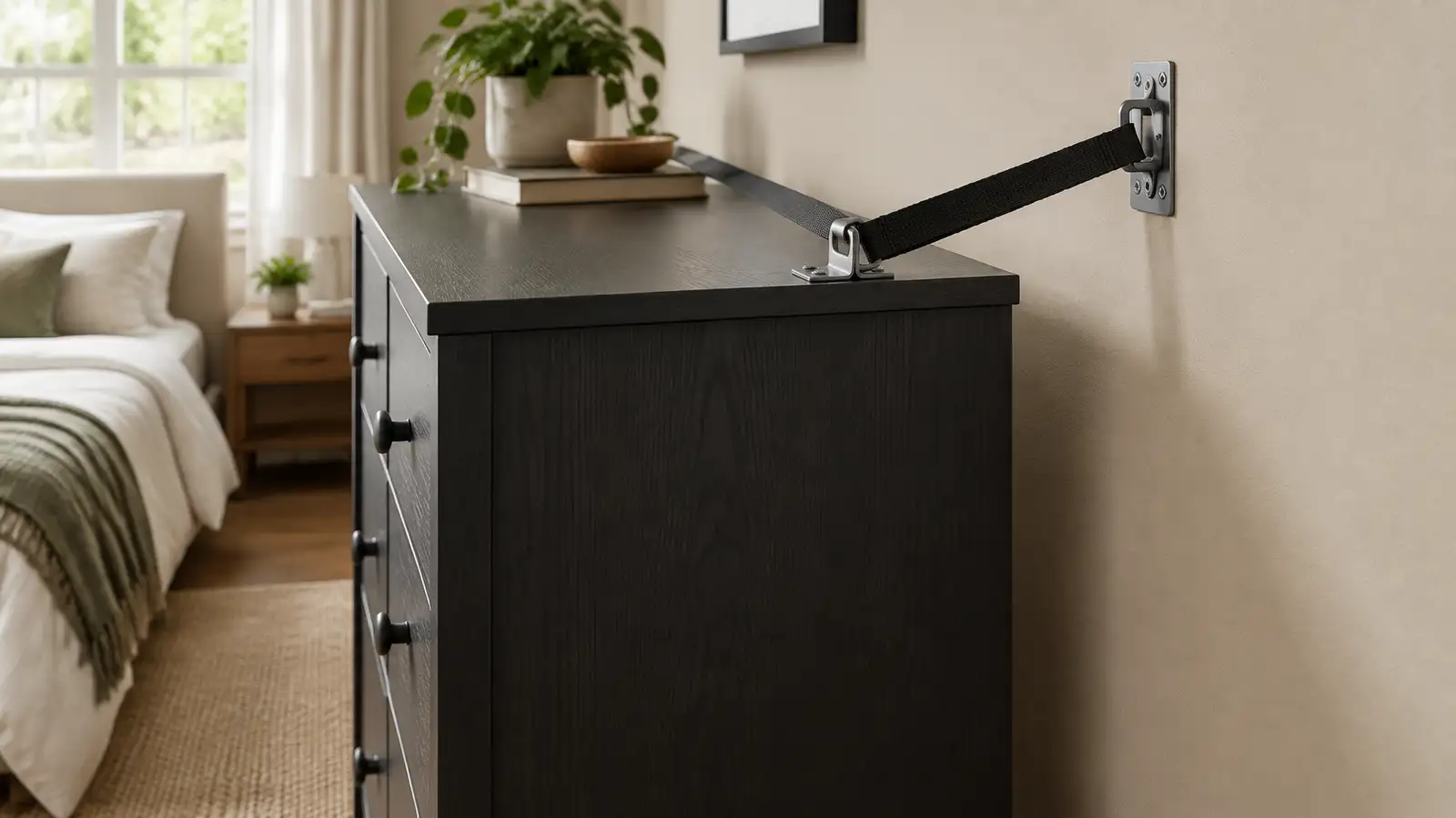
- Identify the unit. Look for a model label, retain the assembly manual and check the model against the CPSC recall database. A missing restraint on a secondhand unit is a reason to obtain the right kit before putting the dresser into service.
- Match both attachment points. The instructions should identify the furniture attachment point and the wall fastener appropriate to your wall construction. A board at the back may be a thin dust cover. The wall may be framing, masonry or another material. If either attachment point is uncertain, ask the manufacturer or a qualified installer to identify it. CPSC’s Anchor It guidance
- Plan for everyday use. Keep heavy items low. Store toys and other things a child might climb for somewhere else. Keep drawers closed after use and follow the maker’s load limits. These steps complement the restraint.
- Recheck after a move. Record the model and keep the instructions. Before using the dresser in a new room, check both ends of the restraint, the wall at the new location and any hardware the maker says to replace.
For a hand-me-down, a photograph of the model label and a copy of the manual are more helpful to the next owner than a loose bag of unidentified screws.