Every home has them — those awkward gaps and forgotten corners you walk past every day without noticing. The space above a doorframe, the narrow gap between the washing machine and the wall, the dead corner behind the toilet. Professional organizers call these dead spaces, and they represent some of the most valuable storage real estate you already own.
You do not need to renovate or buy a bigger house. You just need to look at your home differently. Here are nine dead spaces you probably have right now and exactly how to put them to work.
1. The Space Above Doors
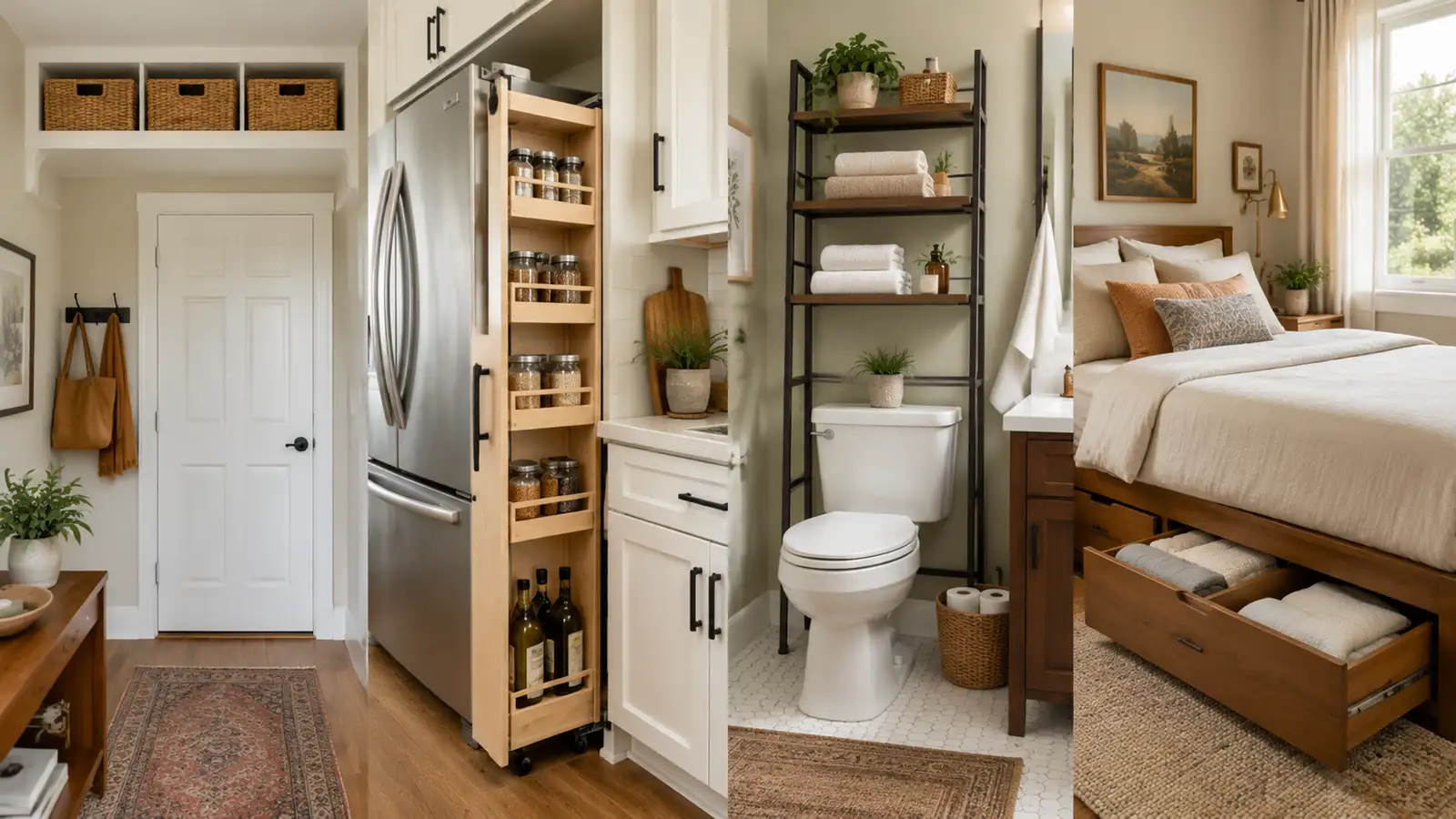
Look at any interior door in your home. There is almost always a strip of wall between the top of the doorframe and the ceiling. In a room with eight-foot ceilings, that gap measures roughly six to ten inches — enough for a shallow shelf that can hold a surprising amount.
Install a narrow floating shelf above closet doors, bathroom doors, or pantry doors. Use it for lightweight storage: extra toilet paper, cleaning supplies in attractive containers, seasonal decorations in labeled boxes, or a row of uniform storage bins. Professional organizer Cassandra Aarssen, known as the Clutterbug, regularly uses this technique in her home makeovers. The key is keeping the items lightweight and the shelf shallow enough that the door can open fully without catching.
For renter-friendly options, tension-mounted shelves or simple brackets with boards from a hardware store do the job without drilling into load-bearing wall sections.
2. The Gap Between Appliances
Most kitchens and laundry rooms leave a narrow gap between the refrigerator and the wall or between the washer and dryer. That four-to-six-inch strip is prime territory for a slim rolling cart.
These pull-out carts cost as little as twenty dollars and hold everything from spices and cooking oils to cleaning sprays and paper towels. The rolling feature means you can pull the entire unit out when you need something in the back and slide it flush against the wall when you are done.
Wirecutter has tested dozens of slim storage carts, and their top picks feature wire shelving that stays stable even when loaded with heavy cans. In the laundry room, the same concept works for detergent, dryer sheets, and stain-removal products.
3. Above the Toilet
The wall above your toilet is one of the most underutilized storage zones in any bathroom. An over-the-toilet ladder shelf or freestanding cabinet adds three to four levels of storage without any mounting required.
Use the top shelf for decorative items — a small plant, a candle, or a rolled towel display. The middle shelves work well for extra toiletries, toilet paper, and first-aid supplies. The bottom shelf, closest to the toilet, is ideal for cleaning products you reach for weekly.
If you prefer a built-in look, wall-mounted shelving above the toilet creates a cleaner appearance. Just make sure to anchor into studs, since bathroom walls tend to hold heavier items like towels and cleaning supplies.
4. Under the Stairs
If your home has a staircase, the space beneath it is one of the largest dead zones you will find. Depending on the height and depth, this area can hold anything from a shoe storage system to a full pantry extension.
IKEA’s TROFAST system works exceptionally well here. The modular frames and bins can be configured to match the slope of the stairs, creating a stepped storage wall that looks intentional rather than squeezed in. For shallower gaps, low rolling carts slide underneath and pull out when you need access.
Home improvement expert Bob Vila has noted that even a small under-stair nook can provide up to twelve cubic feet of storage — roughly equivalent to a standard bookshelf. Use it for seasonal items, holiday decorations, or a designated drop zone for keys, mail, and backpacks.
5. Inside Cabinet Doors
Open any kitchen or bathroom cabinet and look at the inside of the door. That flat, empty surface can hold adhesive hooks, magnetic strips, small bins, or spice racks.
A magnetic knife strip mounted inside a medicine cabinet is a surprisingly effective hack for organizing tweezers, nail clippers, bobby pins, and other metal grooming tools. Wirecutter editor Rose Maura Lorre uses exactly this setup to free up drawer space in her bathroom. In the kitchen, adhesive hooks on the inside of lower cabinet doors can hold measuring cups, oven mitts, or reusable shopping bags.
Adhesive-backed small bins work well for sponges, cleaning tablets, or under-sink organizers. The trick is keeping the items flat and light so the adhesive holds over time.
6. Under the Bed
The space beneath a bed is classic dead space that many people fill with dust bunnies and lost socks instead of useful storage. Rolling under-bed bins, vacuum-seal bags, and low-profile containers transform this area into a seasonal clothing archive.
Caroline Mullen, a cleaning expert featured in Wirecutter’s small-space guides, recommends compression bags for off-season wardrobes. Roll the air out, slide the flat package under the bed, and you have effectively doubled your closet space. This approach works especially well in apartments where closet square footage is limited.
If your bed frame sits too low for standard storage bins, consider risers. Two-inch bed risers add enough clearance for most under-bed containers and are inexpensive at any home goods store. Platform beds with built-in drawers eliminate the need for external containers entirely.
7. Corners Nobody Uses
Every room has at least one corner that feels impossible to furnish. Too deep for a standard shelf, too awkward for a desk, too far from outlets for a lamp. These dead corners are perfect for corner shelving units or lazy Susans.
In the kitchen, a corner cabinet lazy Susan transforms an unreachable dark void into accessible storage for pots, pans, and small appliances. In the bathroom, a freestanding corner shelf unit holds towels and toiletries without protruding into the walkway. In the living room, a triangular corner shelf displays books and decorative objects while making use of space that would otherwise sit empty.
Corner units also work well in pantries, where a rotating organizer brings items from the back to the front. No more expired cans hiding behind the ones you actually use.
8. Behind Doors
The back of any door is a vertical storage surface waiting to happen. Over-the-door hooks, hanging shoe organizers, and Elfa behind-door racks add storage without using a single square foot of floor space.
In the entryway, an over-the-door rack holds coats, bags, hats, and scarves for every family member. In the pantry, a hanging shoe organizer — yes, the same kind used for shoes — works brilliantly for snack packages, canned goods, or cleaning supplies, with each pocket holding a different category.
In the bedroom, hooks behind the closet door create a staging area for tomorrow’s outfit. In the bathroom, a small over-the-door hook holds a bathrobe or towel within arm’s reach of the shower.
The Container Store’s Elfa system offers behind-door racks that mount without hardware, using the door’s top edge for support. They are adjustable and work on any standard interior door.
9. The Sink Base Cabinet
The cabinet under your kitchen or bathroom sink is typically a dark, pipe-obstructed chaos zone. A few simple organizers turn it into a model of efficiency.
Start with a tension rod. Install it horizontally across the cabinet interior, just below the sink basin, and hang spray bottles by their triggers. This single trick frees up the entire floor of the cabinet for stackable bins or a rolling caddy.
Next, add a two-tier shelf riser. These small platforms double your vertical storage for items like sponges, dish soap refills, and drain cleaners. Place frequently used items on the front half of each tier and less-used items toward the back.
For bathroom sink cabinets, a small lazy Susan holds all your skincare products and makes everything visible at a glance. No more knocking over bottles trying to reach the moisturizer in the back.
Start With One Space
The biggest mistake people make when tackling dead-space storage is trying to do everything at once. Pick the one dead space that bothers you most — the cabinet under the sink, the gap beside the fridge, the corner in the hallway — and address it first.
Once that one space is organized, the satisfaction of using previously wasted area naturally motivates you to move on to the next. Within a few weeks, you will be amazed at how much storage you have been sitting on without realizing it.
Your home probably does not need more storage furniture. It needs better use of the space it already has.