Marie Kondo taught the world to keep only what sparks joy. Swedish death cleaning reframed decluttering as a gift to your loved ones. But there’s a third Japanese method that predates both in spirit, and it’s the one that tackles something neither of the others quite reaches: the moment before clutter enters your life.
Danshari, coined by Japanese author Hideko Yamashita in 2009, isn’t a cleaning routine. It’s a framework for how you relate to objects: before you buy them, while you own them, and when it’s time to let go. The name itself tells you everything. Dan (refuse), sha (dispose), ri (separate). Three actions. One system that, done right, makes tidying almost unnecessary.
I’ve written about plenty of decluttering methods on this site — the KonMari method, Swedish death cleaning, even a soft decluttering approach for people who find the other ones too aggressive. Danshari lands somewhere different. It’s gentler than the name sounds, and stricter than most people expect.
What Is Danshari and Where Did It Come From?
Hideko Yamashita introduced danshari in her 2009 book Danshari: Shin Katazukejutsu, roughly translated as “The New Art of Tidying.” The concept was popular enough to earn a nomination for Japan’s new buzzwords prize in 2010, awarded by publisher Jiyuukokuminsha. But the idea didn’t come out of nowhere.
Yamashita’s mother had what she described as a “collecting mentality.” When the house felt cramped, her mother bought storage furniture instead of getting rid of things. She complained the house was too small and hard to clean, never making the connection that the problem was the volume of stuff, not the square footage. Yamashita watched this cycle and eventually asked: why do conventional organizing books focus on storing things better instead of having fewer things in the first place?
That question led her to the three-part framework that defines danshari. Unlike minimalism, which asks “how little can I live with?”, danshari asks “what is the right amount for me?” — and then builds a system to maintain it.
The Three Pillars: Refuse, Dispose, Separate
Each kanji character in dan-sha-ri represents a distinct action, and they’re meant to be practiced in order.
Dan (断) — Refuse. This is the one most decluttering methods skip. Dan means stopping unnecessary things from entering your home at the point of acquisition. The free tote bag at a conference. The buy-one-get-one deal on something you only needed one of. The impulse purchase that felt good for thirty seconds and has been taking up shelf space for three years. Dan isn’t about depriving yourself. It’s about recognizing that most of what enters your home enters because you said yes to it. Saying no is the cheapest and most effective organizing tool you have.
Sha (捨) — Dispose. This is the part people think of as decluttering. Go through what you already own and get rid of what you don’t use, don’t need, or don’t like. Yamashita’s version is less sentimental than KonMari’s. There’s no “thanking” objects. The question isn’t whether something sparks joy — it’s whether it earns its space. If you haven’t used it in a year and it serves no clear purpose, it goes.
Ri (離) — Separate. This is where danshari diverges from every other method. Ri means detaching from the desire for things altogether. It’s not about owning less so you can buy more later. It’s about reaching a state where you don’t feel the pull to accumulate. Yamashita describes this as the goal, not the starting point. You can’t skip to ri without doing dan and sha first, but ri is what makes the whole thing sustainable.
How Danshari Compares to Other Decluttering Methods
If you’ve tried KonMari and found it too precious, or Swedish death cleaning and found it too abstract, danshari fills a gap.
KonMari is category-based and emotion-driven. You gather all your clothes, hold each item, and keep only what sparks joy. It’s effective but exhausting — an event, not a lifestyle. Danshari is process-based. It doesn’t ask you to feel anything. It asks you to make decisions at three checkpoints: when you acquire, when you keep, and when you let go.
Swedish death cleaning, popularized by Margareta Magnusson, frames decluttering as a responsibility to your heirs. The emotional weight can be heavy — you’re confronting your mortality while sorting through kitchen drawers. Danshari doesn’t carry that baggage. It’s grounded in daily practice, not legacy planning.
Extreme minimalism takes a different path. The Fumio Sasaki approach of owning thirty items and sleeping on the floor. Danshari explicitly rejects this. Yamashita distinguished her method from minimalism by emphasizing optimization over minimization. The goal isn’t to own as little as possible. It’s to own exactly what you need and nothing you don’t.
The key difference comes down to philosophy. Minimalism asks “what can I live without?” Danshari asks “what makes my life work better?” One subtracts. The other calibrates. In practice, a danshari practitioner might own more than a minimalist — but each item serves a clear, ongoing function. A minimalist might keep one frying pan on principle. A danshari practitioner keeps two because they actually cook stir-fry and pancakes in different pans, and both get used every week.
How to Practice Danshari: A Practical Guide
You don’t need a three-day weekend and a dumpster. Danshari works best when you treat it as a habit, not a project.
Start with one surface. Your nightstand. Your kitchen counter. One shelf. The danshari principle applies even at this scale: refuse new things landing there, dispose of what doesn’t belong, and notice what it feels like to have clear space. Professional organizers who teach the method emphasize that starting small is non-negotiable. The psychological shift matters more than square footage cleared.
Apply dan to your next purchase. Before you buy anything that isn’t groceries or medicine, pause. Ask: would I still want this if it had to sit on my kitchen counter for a week before I could put it away? The physical space something will occupy is a better filter than whether you “like” it or “might need it someday.”
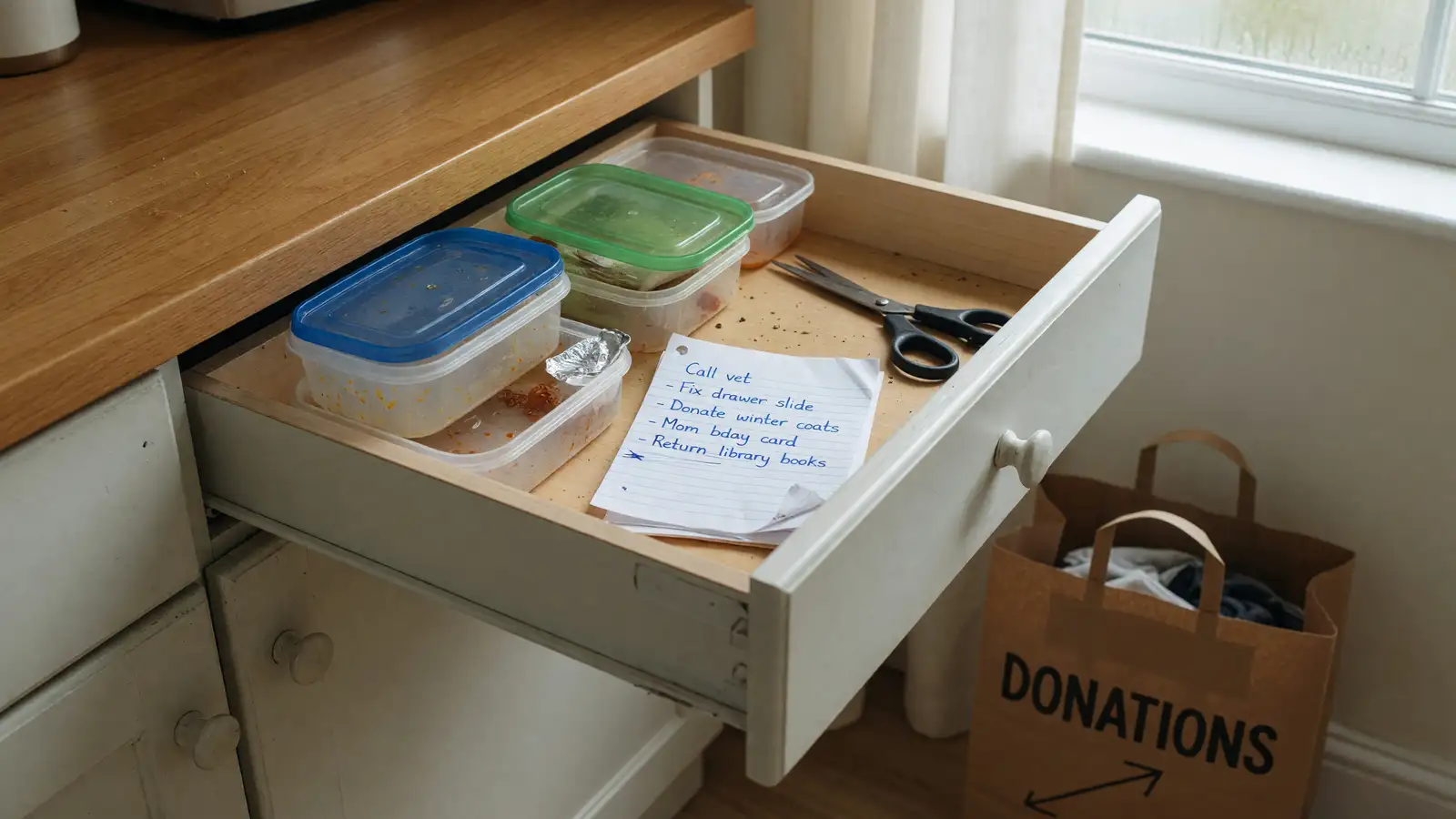
Do sha in fifteen-minute sessions. Set a timer. Pick one drawer, one shelf, one box. Remove everything. Put back only what you actually use. Everything else goes into a bag. If you haven’t opened the bag in two weeks, donate or discard it without looking inside. This prevents the “but maybe I’ll need it” spiral that kills most decluttering attempts.
Track your emotional state during ri. This is the hardest and most important step. When you feel the urge to buy something, write down what you’re feeling — not what you want to buy. Boredom? Anxiety? The dopamine hit of a new thing? Ri doesn’t mean you stop wanting things. It means you understand why you want them, and that understanding slowly loosens the grip.
Professional organizer Di Ter Avest, founder of Di is Organized, notes that danshari practitioners tend to develop a sharper filter over time. “They start noticing that most purchases are responses to feelings, not genuine needs. Once you see the pattern, it’s hard to unsee it.”
Know when to stop. One misunderstood aspect of danshari is that it has an endpoint. Unlike perpetual decluttering, the method assumes you will eventually reach equilibrium — a state where dan, sha, and ri work without conscious effort. For most people, this takes months, not weeks. Yamashita’s original framework treats this as a gradual transformation, not a crash diet for your home.
Most people who try danshari report that dan (refuse) creates the biggest change with the least effort. Once you stop letting things in, sha becomes easier. And once sha becomes easier, ri starts to happen on its own.
Why Danshari Works When Other Methods Don’t Stick
The reason most organizing methods fail isn’t that people are lazy. It’s that the methods treat symptoms instead of causes.
KonMari clears your house once. If your buying habits don’t change, the house refills. Swedish death cleaning gives you a powerful reason to declutter, but the emotional intensity can be paralyzing. Minimalism tells you to want less but doesn’t give you a process for getting there.
Danshari addresses the full cycle. Dan handles input. Sha handles inventory. Ri handles the psychology. When all three are in motion, you’re not fighting clutter — you’re operating a system that prevents it.
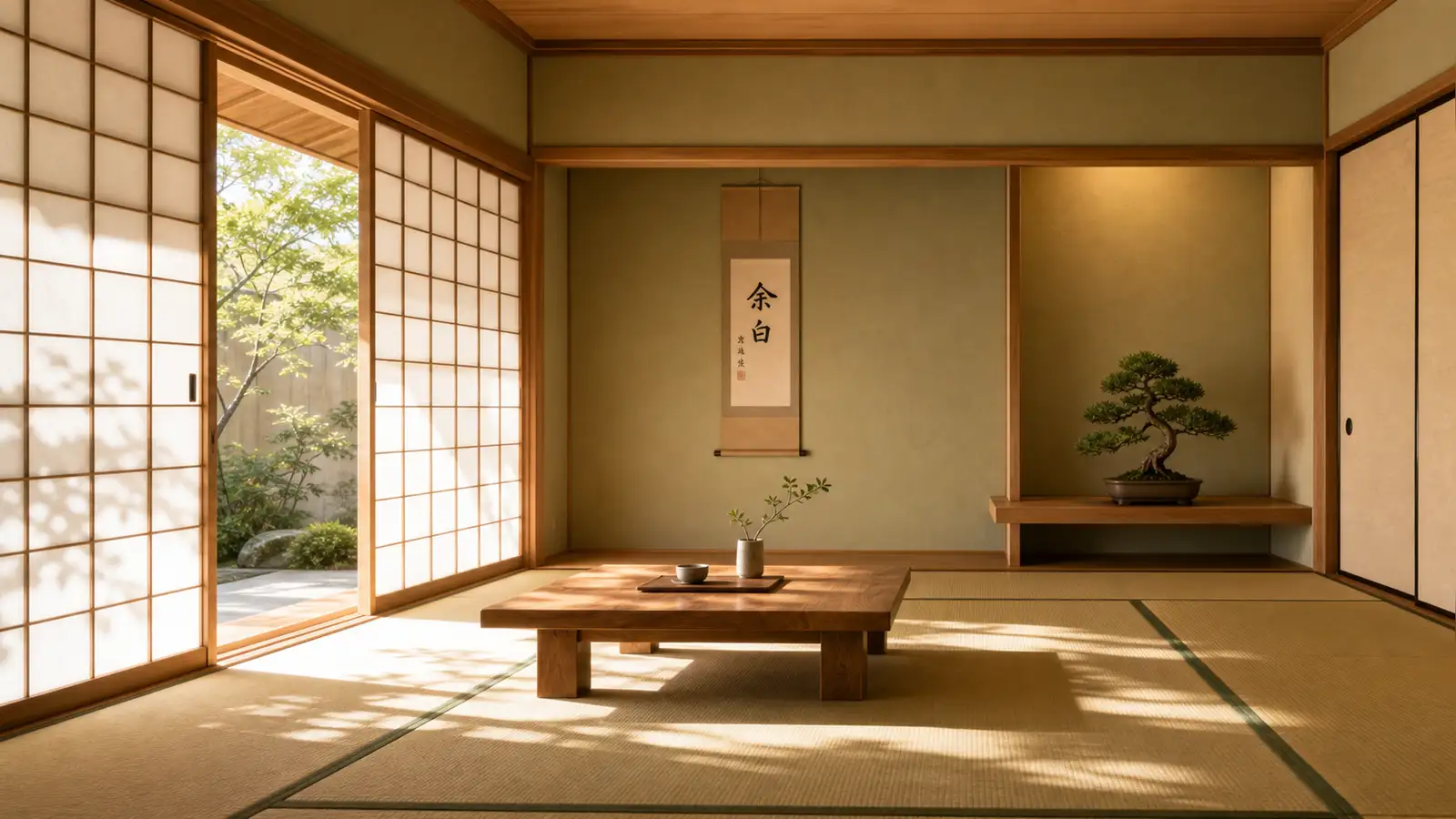
There’s also something uniquely Japanese about the framework that resonates beyond cultural boundaries. Japan’s living spaces are small by Western standards. Tokyo apartments average around 700 square feet for a family. You can’t afford accumulation. The design of danshari reflects this reality: it’s built for people who don’t have a basement, an attic, and a two-car garage to absorb bad decisions. Its roots trace back further than Yamashita’s book — Zen Buddhism’s emphasis on simplicity and Shinto’s respect for empty space both inform the philosophy. You don’t need to study either tradition to benefit, but knowing the cultural grounding helps explain why it feels different from Western organizing systems.
The Hardest Part Isn’t the Stuff
Ask anyone who’s practiced danshari seriously, and they’ll tell you the physical decluttering is the easy part. Dan and sha are tangible. You can see the empty shelf. You can count the bags leaving your house.
Ri is invisible work. It asks you to examine your relationship with wanting — and that’s uncomfortable in a culture built on consumption. Yamashita herself described the ultimate goal as a kind of freedom: not freedom from things, but freedom from the need for things. It sounds philosophical because it is. But the people who reach that state describe it in surprisingly practical terms: fewer decisions, less maintenance, more mental bandwidth for what actually matters.
The 1-3-5 rule, which I’ve written about before, gives you a tactical framework for what to keep. Danshari gives you a framework for why you’re keeping anything at all. They work well together — one handles the short-term decisions, the other builds the long-term mindset.
You don’t have to master all three pillars at once. Most people start with sha because the visible results are motivating. But if you only do sha, you’ll be back in the same spot in six months. The real shift happens when you add dan — when you start refusing things before they cross your threshold. That’s the part that changes everything.