Craft supplies are uniquely difficult to organize because they span an enormous range of sizes, shapes, and materials. Yarn skeins are soft and squishable. Fabric is flat until it is not. Beads are tiny and abundant. Paint tubes are small but numerous. Paper is rigid and needs to stay flat. And every crafter knows the truth that non-crafters do not understand: you cannot simply get rid of supplies because inspiration strikes unpredictably and requires specific materials.
The solution is not to own fewer supplies. It is to organize them so that when inspiration does strike, you can find what you need in seconds rather than spending the entire creative window searching for the right shade of blue.
Sort by Project, Not by Type
The standard organizing advice to group by category falls apart with craft supplies. Grouping all blue things together regardless of project leaves you hunting through unrelated materials every time. Instead, group by project. All jewelry-making supplies together. All knitting supplies together. All paper crafting supplies together.
Within each project zone, sub-organize by the logic of that craft. Knitting supplies sort by yarn weight. Beading supplies sort by bead size and color. Paper crafting supplies sort by paper size and pattern. The sub-organization mirrors how you actually use the materials rather than an abstract taxonomy.
The Container Hierarchy
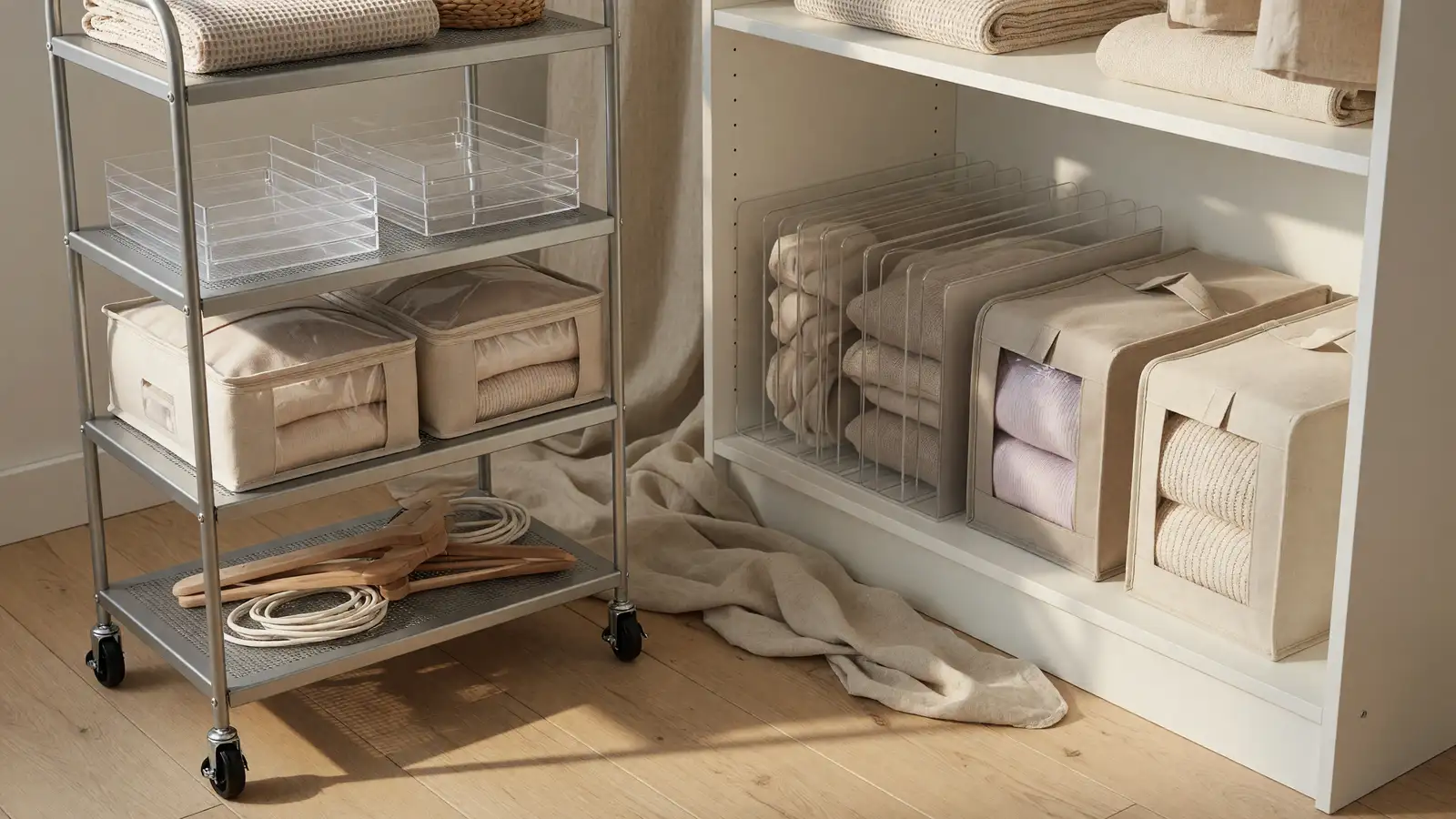
Craft supplies need three levels of containment: the project zone, the category container, and the sub-container for small parts. The project zone might be a shelving unit or a cabinet dedicated to one craft. Within that zone, clear bins hold categories. Within the bins, smaller containers hold the smallest items.
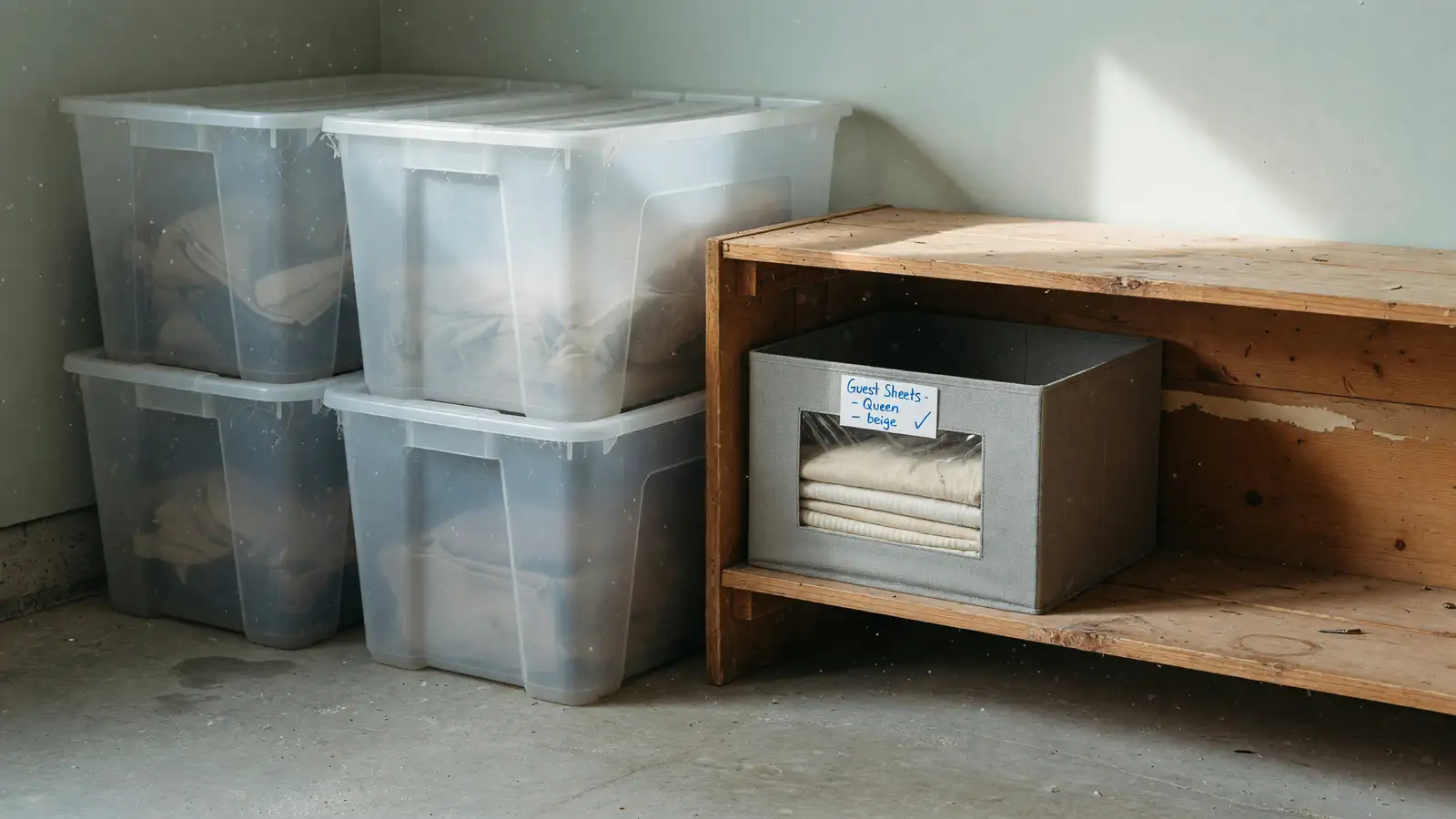
Clear containers are mandatory for craft storage. You need to see the materials to be inspired by them. A craft supply hidden in an opaque bin might as well not exist. The visibility of clear containers also prevents the duplicate purchases that happen when you cannot remember whether you already own gold jump rings in the six-millimeter size.
Stackable containers with secure lids allow vertical storage that uses shelf height efficiently. The lids prevent the cascade failure where one knocked-over bin of beads takes out three bins below it like dominos. For frequently accessed supplies, containers without lids on open shelving trade a small dust risk for zero-friction access.
Specific Solutions for Problem Materials
Yarn benefits from cubby-style storage where each skein or cake lives in its own compartment, visible and protected from tangling. Cube shelving units with fabric bin inserts are ideal. For partial skeins, a simple over-the-door shoe organizer with clear pockets stores dozens of skeins vertically, using only door space.
Fabric is best stored like books: folded to a uniform size and stood on end in clear bins or on shelves. When fabric is visible by the folded edge rather than stacked flat, you can flip through options without dismantling the entire collection. Comic book boards wrapped inside fabric folds create uniform rigidity for shelf storage.
Beads and small findings require compartmentalized storage where each type is separated. Craft storage boxes with adjustable dividers are the gold standard. Label each compartment. The labeling discipline takes discipline to maintain but saves hours of hunting for the exact finding you need.
Washi tape, ribbon, and twine store most efficiently on dowels or tension rods mounted horizontally. Spools spin freely, and the visual display of colors and patterns is inherently inspiring. A curtain rod mounted inside a cabinet door or on a wall holds dozens of rolls in the footprint of a single stack.
The Project Bin System
For works in progress, a dedicated project bin contains everything needed to complete that specific project: the pattern, the yarn, the needles, the notions. When you have time to craft, you grab the bin and everything is together. When you need to pause, the bin closes and the project stays intact and portable.
Project bins prevent the creative chaos where one abandoned project spreads across three surfaces and prevents starting anything new. Each active project gets one bin. When the bin is full with a project, you either finish that project before starting another or you acknowledge that the abandoned project needs to be officially paused and stored.
Craft supply organization is a living system. It evolves as your crafts evolve. The goal is not magazine-photo perfection but functional accessibility. When you can sit down to create within minutes of feeling inspired, the organization has done its job.