You know that feeling when you stumble into the kitchen at 6:45 AM, still half-asleep, and the first thing you see is last night’s dinner dishes crusted over on the counter? The takeout containers you swore you’d deal with “in a minute.” The mail pile that’s somehow multiplied since Tuesday. Your day hasn’t even started and you’re already behind.
That’s the problem the “closing shift” solves. If you’ve ever worked in a restaurant, you know the drill: before anyone goes home, the kitchen gets wiped down, the floors get swept, the stations get restocked, and the place gets set up for tomorrow’s opening crew. The next morning, the first person through the door walks into a clean, ready-to-go kitchen. No scrambling. No panic. Just start.
Your home deserves the same treatment.
What a Closing Shift Actually Looks Like
This is not a deep clean. Nobody is suggesting you mop the floors and scrub the shower at 10 PM. The closing shift is a targeted, time-boxed reset of the spaces that affect your morning the most. For most people, that’s the kitchen and the main living area. Bathroom gets a quick pass. Bedroom gets a two-minute tidy. That’s it.
The magic number is fifteen minutes. Set a timer if that helps you stay focused — it helps most people. When the timer dings, you stop. Whatever didn’t get done waits until tomorrow. The point is consistency, not perfection. A fifteen-minute reset five nights a week does more for your home than a two-hour weekend deep clean that leaves you exhausted and resentful.
The Five Non-Negotiable Tasks
These are the tasks that, if nothing else gets done, still give you a clean morning. Each one takes about three minutes.
First, load and start the dishwasher. If you have one, run it overnight. If you don’t, wash the dishes, stack them in the drying rack, and wipe down the sink. Waking up to an empty sink is genuinely one of life’s underrated pleasures. A sink full of dirty dishes is a visual anchor that drags your mood down before you’ve even had coffee.
Second, wipe the kitchen counters. You don’t need a specialized spray for this. A damp microfiber cloth works fine for daily crumbs and spills. Move the coffee maker, the toaster, the mail pile — wipe underneath, then put things back. The goal is a clear, clean surface, not a sanitized surgical field.
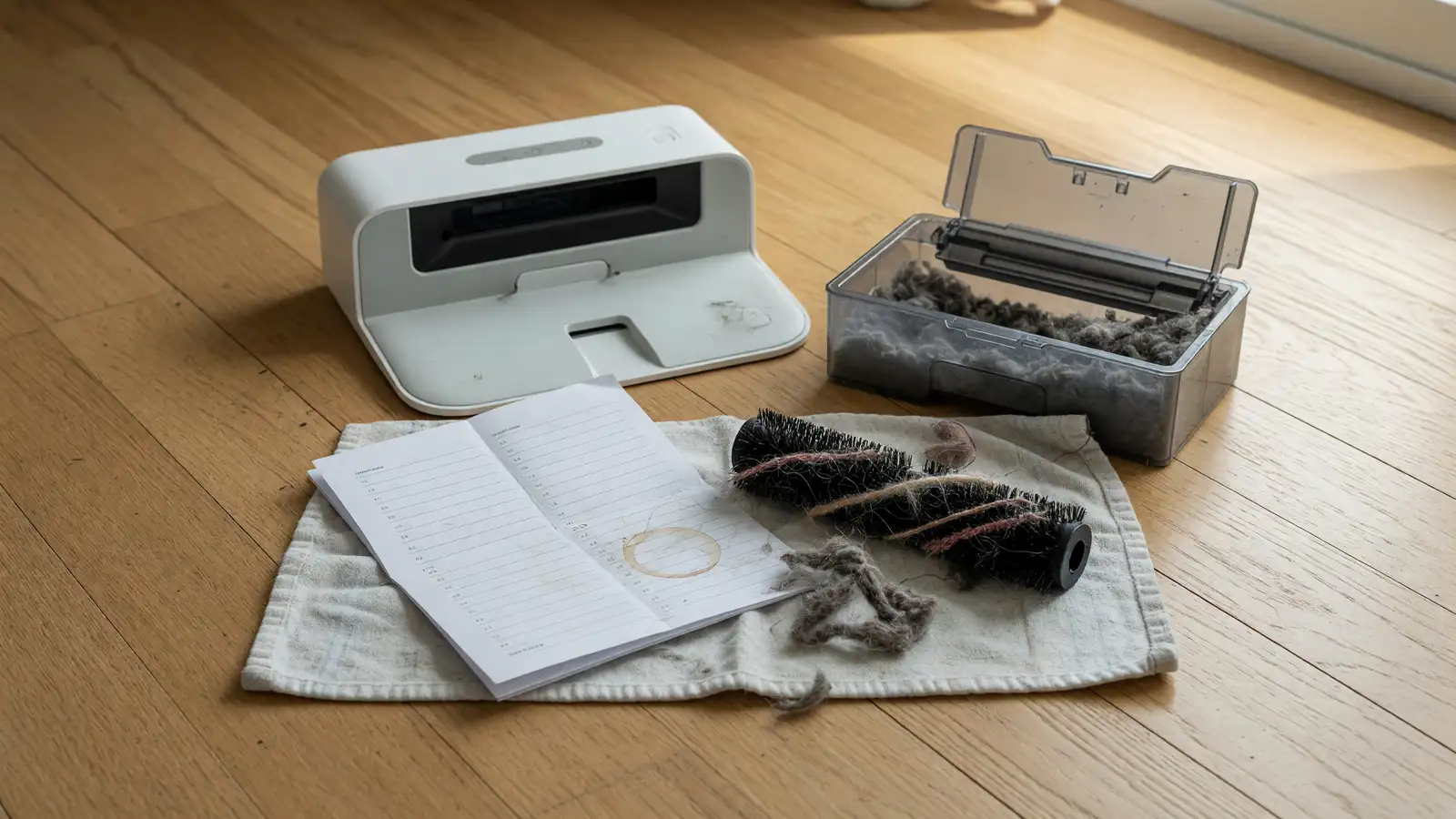
Third, deal with the floor. A quick sweep or a pass with a cordless vacuum takes under two minutes. You’re not deep cleaning. You’re catching the visible crumbs, the dog hair tumbleweeds, the cheerio someone’s going to step on tomorrow morning. If you have a robot vacuum, this is the perfect time to set it loose while you do the other tasks.
Fourth, take out the trash if it’s full. Not if it’s half full. Not if it “could probably go another day.” If the lid doesn’t close or something in there smells, it goes out now. The thirty-second walk to the outside bin saves you from walking into a kitchen that smells like yesterday’s salmon the next morning.
Fifth, stage tomorrow’s essentials. Set out the coffee mug and the breakfast supplies. Put the kids’ lunchboxes on the counter. Lay out your keys, wallet, and work bag by the door. The mental load of “where did I put…” vanishes when everything is already in position. You’re doing Future You a favor, and Future You will be genuinely grateful.
Making It Stick When You’re Exhausted
Some nights you will not want to do this. You’ll be tired. You’ll have worked late. The couch will be calling your name with the gravitational pull of a small planet. On those nights, do the two-minute version.
Set a timer for 120 seconds. In that time: load the dishwasher (even if you don’t start it), wipe the one counter you use most, and put three things back where they belong. That’s it. Two minutes. You can do two minutes. And here’s the thing: once you start, you’ll often keep going. The hardest part of any cleaning task is the first thirty seconds. Momentum carries the rest.
Habit stacking helps too. Tie your closing shift to something you already do every night without fail. Right after you brush your teeth, you do the kitchen reset. Right after you set your alarm, you do the living room pickup. The existing habit becomes the trigger, and after a couple of weeks, the closing shift feels as automatic as locking the front door.
The Morning Payoff
The first morning you wake up to a clean kitchen, you’ll understand why this matters. You walk in, the counters are clear, the coffee mug is waiting, the sink is empty. You didn’t have to earn that clean space this morning — you earned it last night, and now you just get to enjoy it. That shift in experience is not subtle. It fundamentally changes how your day starts.
People who practice a closing shift consistently report something interesting: they sleep better. Partly because there’s no low-grade anxiety about the mess waiting for them. Partly because the act of closing down the house signals to your brain that the day is actually over. It’s a ritual as much as it is a chore.
Getting Everyone Involved
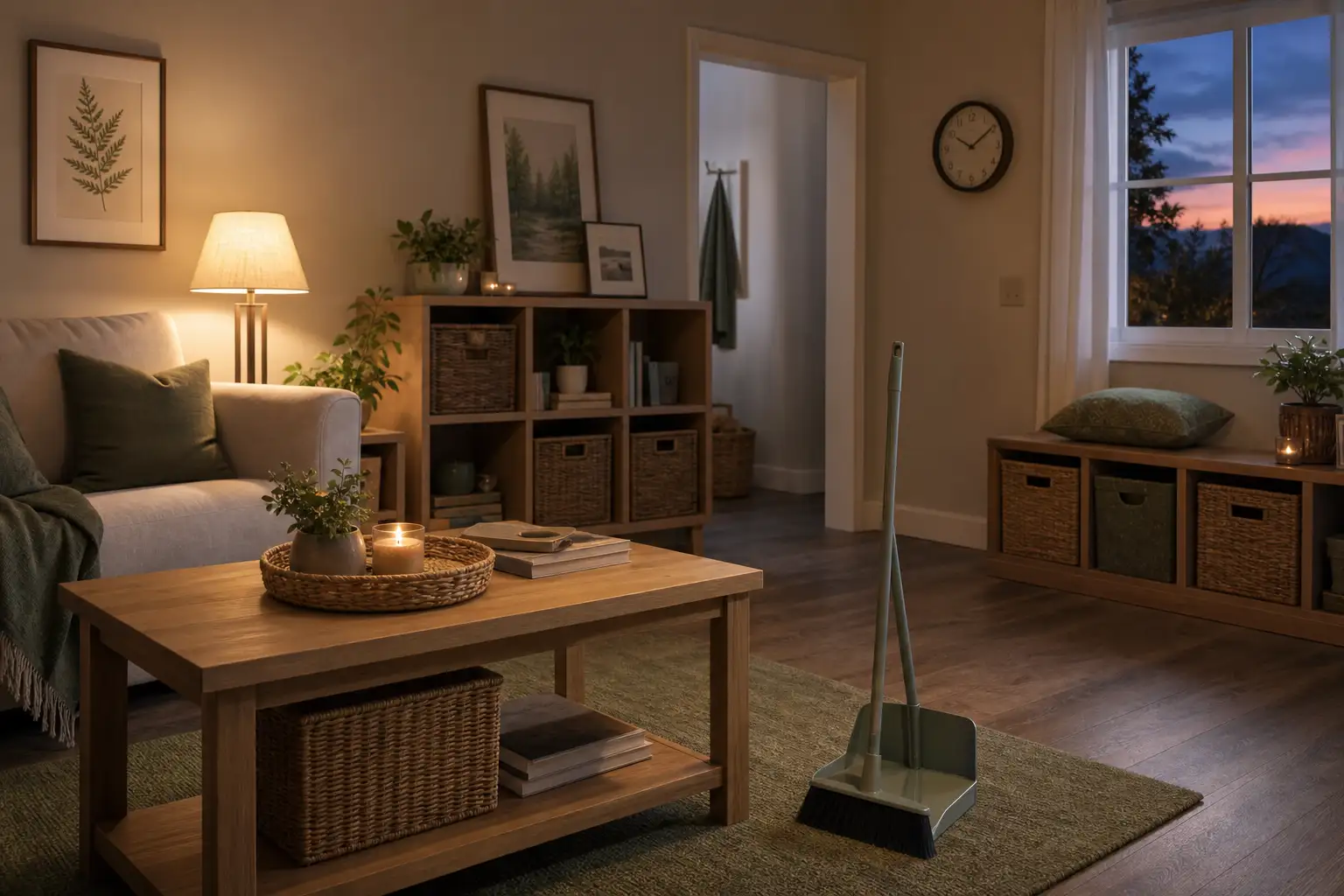
If you live with other humans — partners, roommates, kids old enough to carry a plate — the closing shift should not be your solo project. Split the five tasks. One person does dishes and counters, the other does floors and trash. Kids can handle the living room pickup: throw pillows back on the couch, put the remote in its spot, carry their shoes to the closet.
A family that closes the house together wakes up to a house that nobody resents. Or at least, nobody resents the mess specifically. The closing shift isn’t about having a showroom-clean home. It’s about giving yourself the gift of a calm morning, every morning, for the price of fifteen minutes the night before. Try it for a week. If it doesn’t change your mornings, you can always go back to crusted-over dishes and morning scavenger hunts for your keys.
But you probably won’t want to.