Attics and basements are the default dumping grounds for stuff you want out of sight. Holiday decorations, winter coats, sentimental boxes, baby clothes you are saving for a future sibling. The thinking goes that these spaces are free storage. And they are, technically. But they are also hostile environments for many of the things you store in them.
Heat, cold, moisture, and pests will ruin your belongings faster than you think. A poorly stored box of Christmas ornaments can emerge covered in mold. A bin of old photos left in an attic can fuse into a solid brick of melted emulsion. Here is how to store seasonal items the right way so they survive until you actually need them.
Understand the climate risks before you store anything.
Attics get extremely hot in summer. Temperatures can exceed 130 degrees Fahrenheit in an unventilated attic. That heat degrades adhesives, melts wax, warps plastics, and destroys photos. Do not store candles, photo albums, electronics, vinyl records, or anything with adhesive backing in an attic. The glue on the back of your old photo prints will soften and stick to whatever is touching it. Your wedding album becomes a permanent sculpture.
Basements have the opposite problem. They are cool and damp. Moisture breeds mold and mildew. Paper, fabric, and leather are especially vulnerable. Cardboard boxes wick moisture from concrete floors and become soggy breeding grounds for mold within months. If your basement smells musty, that is mold you are smelling. The items stored down there are already being damaged.
Before you store anything in either space, assess the conditions. An attic with good ventilation and insulation is safer than one without. A basement with a dehumidifier running and sealed concrete floors is safer than one with exposed foundation walls. If you would not be comfortable sitting in that space for an hour, your belongings will not be comfortable living there permanently.
Clear labeled bins. Never cardboard boxes.
Cardboard boxes belong in your recycling bin, not your storage spaces. They attract pests. Silverfish, mice, and cockroaches love cardboard. They eat it. They nest in it. They leave droppings in it. Cardboard also absorbs moisture and collapses under the weight of other boxes when stacked.
Use clear plastic bins with tight-fitting lids. Clear bins let you see the contents without opening every single one. That alone saves you twenty minutes every time you go hunting for the Halloween decorations.
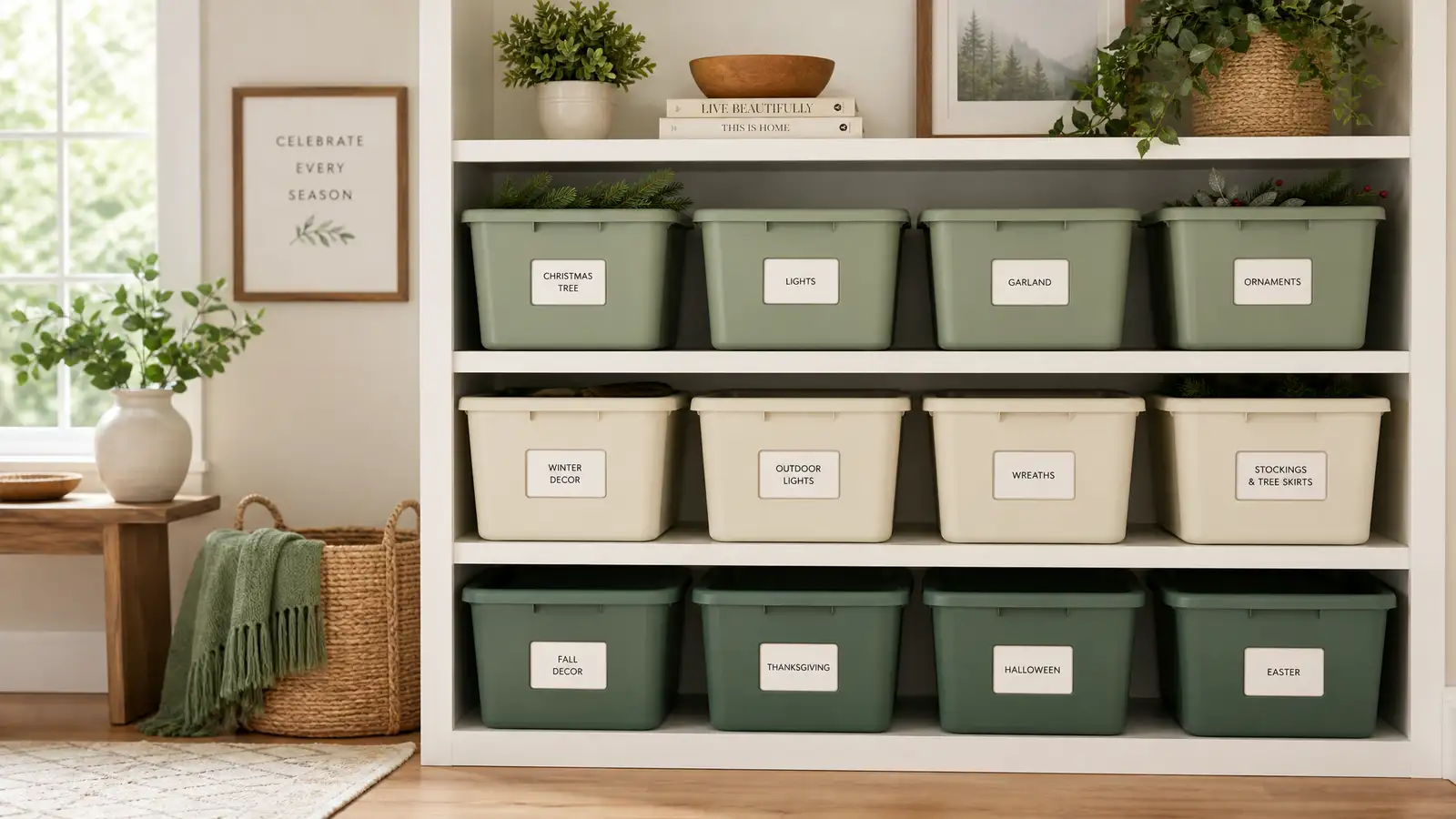
Label every bin on the side and on the top. Write the category in large letters with a paint marker or use a label maker. Holiday decorations: Christmas. Winter clothing: Kids ages 4-6. Camping gear: Tent and sleeping bags. Be specific. “Miscellaneous” is a label that means “I will never find what I am looking for.”
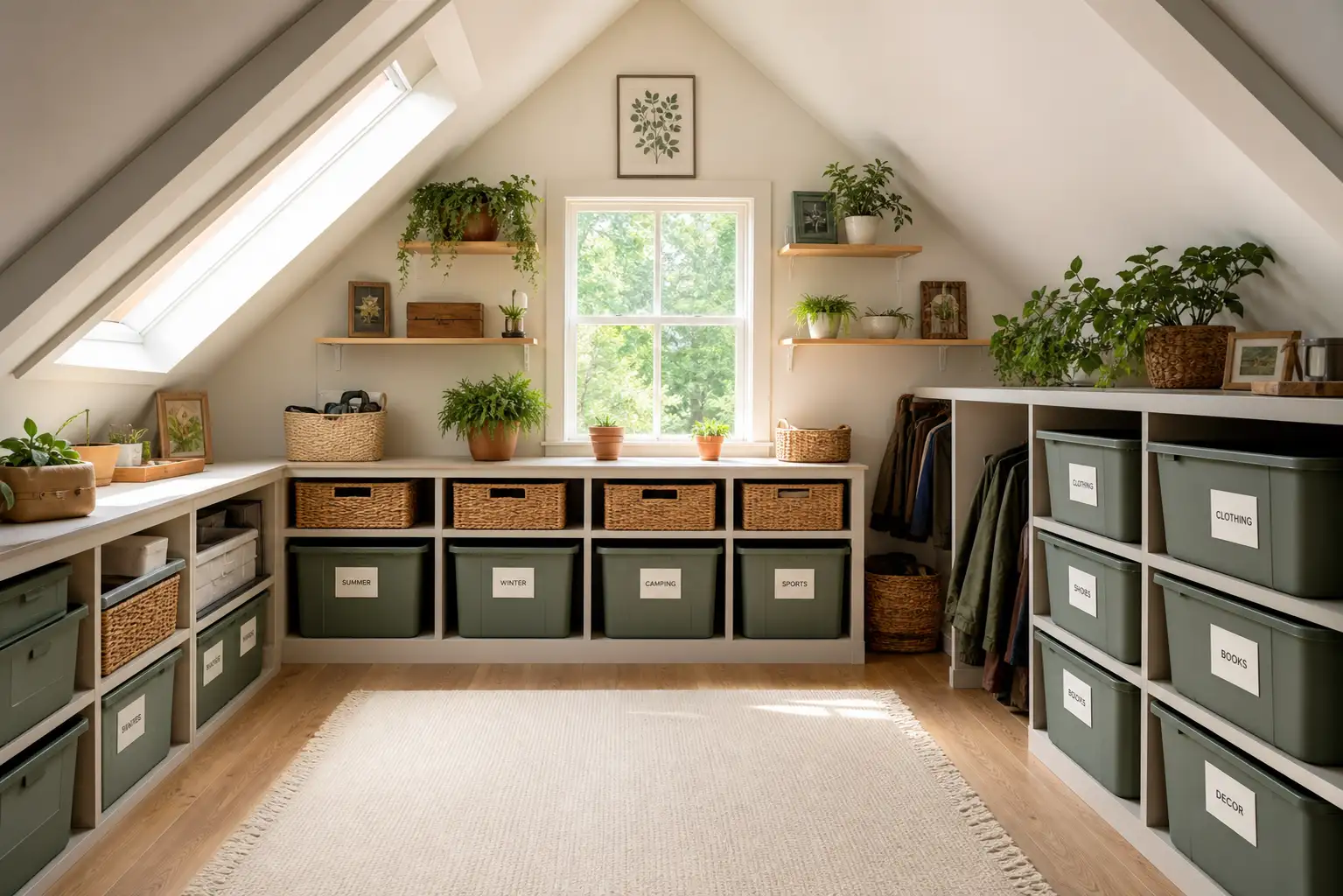
Group bins by zone. All holiday bins go on one shelf unit. All clothing bins on another. All camping and outdoor gear on a third. When you need to swap seasonal wardrobes in spring and fall, you know exactly where to go.
Shelving versus stacking. Always shelving.
Stacking bins on the floor seems efficient. It is not. The bin on the bottom of a stack of four is inaccessible without moving the three above it. If you need something from the bottom bin, you now have an unstacking project. Most people skip the project and buy replacements instead. That is how you end up with four identical sleds because nobody wanted to dig to the bottom of the pile.
Install heavy-duty shelving units. Metal wire shelves work well and allow air circulation. Wood shelves are fine if the space is dry. The rule is simple. Every bin sits on a shelf at a height you can reach without a step stool for the ones you access most often. Seasonal items you touch once a year can go higher.
Leave walking room between shelves. You need to physically access every bin. If you have to squeeze sideways and hold your breath to reach the Christmas ornaments, you will avoid that task forever.
Zone-based seasonal organization.
Divide your storage space into zones by season and access frequency. Zone A is for items you access multiple times per year. Extra paper towels, light bulbs, tools. Keep this zone near the entrance at eye level. Zone B is for seasonal items you swap twice a year. Winter coats in summer bins, summer clothes in winter bins. Zone C is for long-term storage you almost never touch. Baby clothes you are saving, inherited items, old tax records.
Within each zone, store the heaviest bins on lower shelves. A bin full of cast iron cookware belongs at waist height or below. A bin of lightweight gift wrap can go up high. This is a safety issue as much as a convenience one. A heavy bin falling from an overhead shelf can injure someone.
The wall-mounted inventory list.
You will forget what is in your storage space. Everyone does. A year passes. You remember you own a pasta maker but you cannot find it. You buy another one. Now you own two.
Mount a whiteboard or a laminated sheet of paper on the wall near the storage entrance. List every bin and its contents. Update it when you add or remove items. When you are in the kitchen wondering if you still have that roasting pan, you can check the list instead of trekking to the basement.
A digital version works too. Keep a simple note on your phone with the inventory. Search for “air mattress” and it tells you which bin to grab. Either way, the list prevents duplicate purchases and wasted search time.
Purge before you store, not after.
The worst time to declutter is when you are pulling bins out to put seasonal items into rotation. You are busy. You just want to get the decorations up or the summer clothes out. You will shove things back into bins without thinking.
Declutter during put-away instead. When you are packing up winter coats in spring, look at each one. Did anyone wear it this year? Is the zipper broken? Does it still fit? Donate the rejects immediately. Do not store them for another year. The same applies to holiday decorations. If you did not put it out this year, you will not put it out next year. Let it go.
Do a yearly purge of the entire storage space. Pick a day in January when the holiday rush is over. Open every bin. Check for damage, pests, or items you forgot you owned. Remove anything you no longer need. This annual audit keeps the storage space from becoming a museum of abandoned possessions.
Silica gel packets and moisture control.
Those little silica gel packets that come in shoe boxes are valuable. Save them. Toss a few into every storage bin, especially bins holding fabric, paper, or anything susceptible to moisture. They absorb excess humidity and prevent musty smells and mold growth.
For basements, run a dehumidifier year-round if you can. Set it to maintain humidity below 50 percent. Empty the reservoir regularly or set up a drain hose. A humidity sensor is cheap and tells you whether your dehumidifier is actually working.
For attics, make sure there is adequate ventilation. Soffit vents and ridge vents allow hot air to escape. If your attic is sealed tight, the heat bakes everything inside. A temperature-controlled attic fan can make a significant difference if you store temperature-sensitive items.
Your stored items represent money you spent and memories you value. A few hours of proper packing and a few dollars in supplies will protect them for years. The alternative is opening a bin next season and finding everything ruined. That is a preventable heartbreak.